Emergency Electrician Warren, MI
Electrical trouble can move from inconvenient to dangerous quickly. If you are searching for help with a burning odor, sparking outlet, repeated breaker trip, partial power loss, or a panel concern in Warren, MI, the first priority is to reduce risk and avoid improvised repairs. Executive Electric provides a clear point of contact for customers who need to discuss urgent electrical concerns and determine appropriate next steps.
Executive Electric is located at 20504 Hall Rd, Clinton Township, MI 48038. That is the company location provided for Executive Electric, rather than a claimed office in Warren. For homeowners, landlords, property managers, and business operators in the area, knowing what constitutes an electrical emergency can make it easier to act calmly, protect people and property, and communicate the problem accurately.
Situations that deserve urgent electrical attention
An electrical emergency is a condition that may present an immediate shock, fire, equipment, or power-supply hazard. Not every electrical issue requires the same response, but visible heat damage, smoke, active sparking, or signs of a damaged service system should not be ignored while waiting to see whether the problem disappears.
Electrical symptoms can have several causes, including a loose connection, overloaded circuit, failing device, damaged wiring, water intrusion, or a problem involving the service equipment. A professional evaluation is important because the visible symptom is not always the source of the fault. Turning a breaker back on repeatedly, replacing it with a larger breaker, or opening a panel without the right knowledge can worsen the underlying risk.
Warning signs to take seriously
Some problems call for immediate caution even if electricity is still working in part of the property. An urgent electrical repair discussion is appropriate when a condition seems unsafe, is getting worse, or affects a critical circuit. Be ready to describe what happened first, what changed, and whether the issue affects one room, several circuits, or the entire building.
- A burning, hot-plastic, or persistent smoky odor near an outlet, switch, panel, appliance, or wiring area.
- Visible sparks, smoke, scorch marks, melted covers, buzzing, crackling, or unusual heat from electrical components.
- A breaker that trips repeatedly, will not reset, or trips after a particular appliance or circuit is used.
- Flickering or dimming lights that occur with other signs, such as warm outlets or loss of power in part of the building.
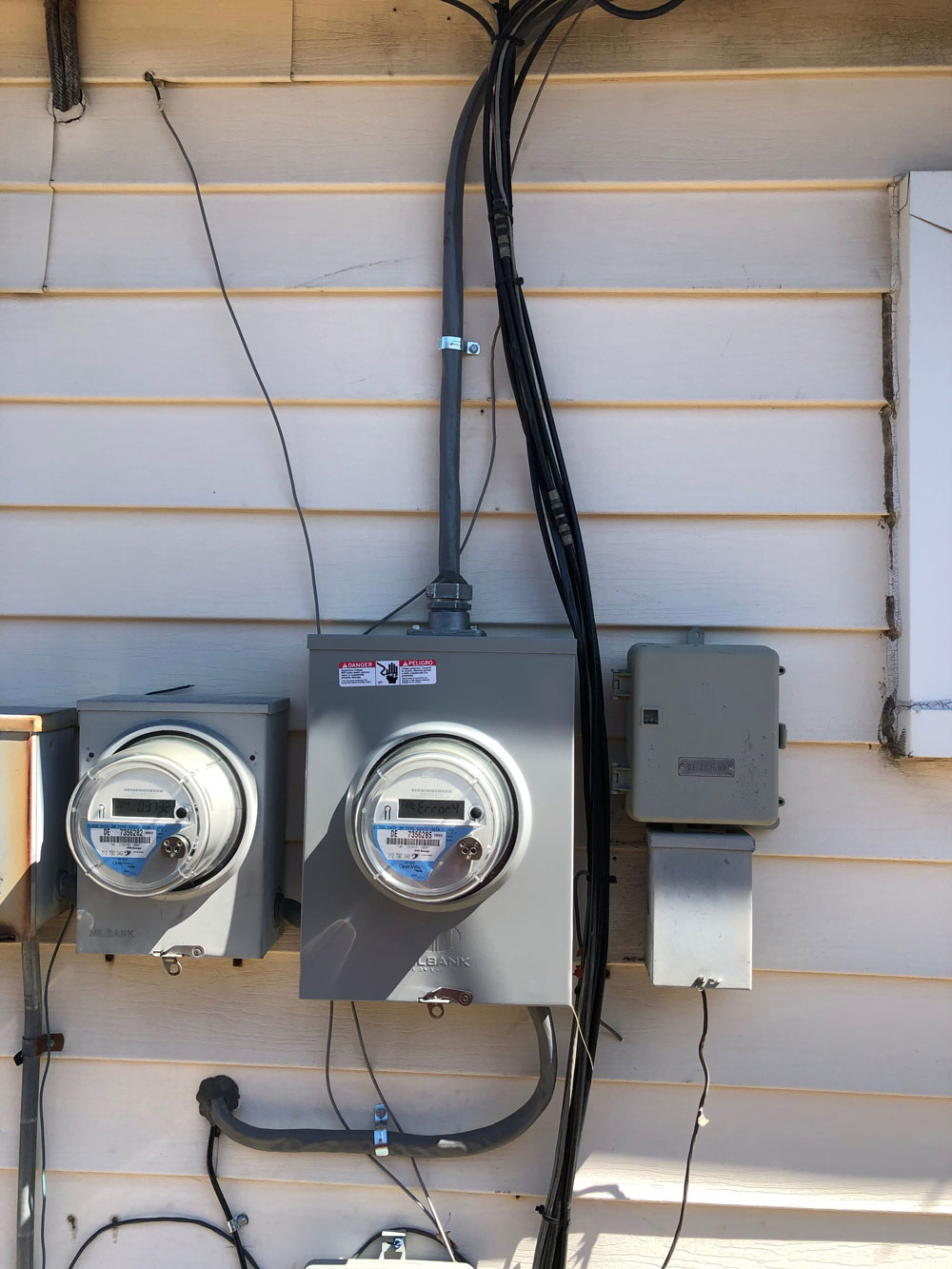
- Water near electrical equipment, a damaged meter or service component, or a downed electrical line.
- A complete or partial loss of power that cannot be explained by a known utility outage.
A utility outage and an interior electrical fault are different issues. If nearby properties are also without power, the utility may be the appropriate first contact. If the issue appears isolated to your property, circuits, panel, or equipment, electrical fault diagnosis may be needed. Never approach a downed line or assume it is safe because it is quiet or no longer visibly sparking.
What to do before contacting an emergency electrician
Start with safety, not troubleshooting. Keep people away from the affected area, avoid touching damaged equipment, and call emergency services when there is fire, smoke, an active fire risk, a fallen line, or an immediate threat to anyone in the building. If it can be done without approaching danger, turn off power at the main disconnect only when you know how to do so safely.
Do not use water on an electrical fire. Do not touch a person who may still be in contact with electricity until power has been disconnected or emergency responders instruct otherwise. In a Michigan home or commercial space, wet conditions add another reason to stay back from exposed or damaged electrical parts.
- Move away from the hazard. Keep children, pets, employees, tenants, and visitors away from the affected outlet, panel, appliance, or outdoor area.
- Stop using the circuit or equipment. Unplug an appliance only if it is safe to reach and there is no heat, water, damage, or arcing at the connection.
- Note the symptoms. Record the time, affected areas, breaker labels, odors, sounds, and any recent event such as a storm, renovation, appliance use, or water leak.
- Use the right contact. Call emergency services for immediate hazards, the utility for a suspected grid outage or downed line, and an electrical professional for a property-side electrical concern.
Photos can sometimes help explain an issue, but never take a photo by moving closer to smoke, heat, exposed conductors, or water. Clear notes are more useful than guesses. For example, “the kitchen counter outlets stopped working after the toaster was used” is more actionable than assuming the entire panel has failed.
How the electrical emergency process generally works
A careful emergency electrical service process begins with the information available before anyone touches the system. The property owner or occupant explains the symptoms and immediate safety concerns, then the electrical issue can be evaluated to identify the affected circuit, component, or system. The appropriate repair path depends on what the assessment finds.
From symptom report to a safer next step
During an initial contact, it helps to share whether there is smoke, heat, water, a loss of power, a tripping breaker, or an appliance involved. Mention whether the building is a residence, rental property, office, retail space, or another type of property. This context can help distinguish a potentially urgent wiring issue from a utility-side interruption or an isolated equipment problem.
On-site electrical troubleshooting commonly involves examining the relevant circuit and connected components, while observing safe procedures around energized equipment. The solution may involve correcting a connection, replacing a damaged component, addressing a circuit issue, or identifying a condition that requires coordination with the utility or another qualified party. The right scope should follow the cause, not merely the most visible symptom.
After a repair or assessment, ask what was found, which circuit or component was affected, what warning signs to watch for, and whether any additional work should be considered. These questions help owners and managers document the event and make informed maintenance decisions. They also help avoid the misconception that resetting power alone proves the electrical system is safe.
Choosing help for a Warren electrical concern
When an electrical problem feels urgent, it is reasonable to want a fast answer. It is equally important to choose a provider based on clear communication, a willingness to understand the actual symptom, and an approach that does not treat safety concerns as a simple reset. A request for an emergency electrician should include enough detail to establish whether the situation is immediately hazardous.
Executive Electric may be relevant when you need to discuss a property-side electrical issue and want a direct way to request contact. In a normal sentence, you can review Emergency Electrician information from Executive Electric before deciding how to proceed with an electrical concern. The company location is 20504 Hall Rd, Clinton Township, MI 48038, which gives customers a specific business address rather than implying a Warren, MI storefront.
Useful details to provide when you reach out
A concise, factual description helps make the conversation more productive. You do not need to diagnose the system yourself. Focus on what you observed, what you did to make the area safer, and whether anyone is currently at risk.
- The property type and whether the issue affects a home, tenant space, common area, business operation, or outdoor equipment.
- The exact symptom, including smoke, odor, noise, heat, flickering, outage, sparking, or breaker behavior.
- When the issue began and whether it followed appliance use, weather, water exposure, construction, or another change.
- What has already been done, such as turning off a circuit, unplugging equipment, or contacting the utility.
- Whether the issue is ongoing and whether emergency services or the utility have been contacted.
There is a meaningful difference between an inconvenience and an immediate hazard. A single dead receptacle without heat, damage, or other symptoms may be a scheduled repair matter, while a warm, discolored receptacle or a panel that emits a burning smell deserves more urgent attention. When uncertainty exists, erring on the side of safety is sensible.
Practical prevention after an urgent issue
Once the immediate situation has been addressed, prevention often starts with avoiding the behaviors that hide recurring problems. Repeatedly resetting a breaker, relying on extension cords as permanent wiring, covering a warm outlet with furniture, or ignoring a buzzing panel can allow a manageable issue to develop into a larger one. Electrical systems communicate problems through symptoms, and those symptoms deserve attention.
Property owners can also keep panel directories understandable, avoid overloading power strips, and watch for damaged cords or loose plugs. These steps are not substitutes for professional electrical repair, but they can make future symptoms easier to identify and explain. For rental and commercial settings, documenting the date, circuit, and reported condition can support better follow-up.
In Warren and elsewhere in Michigan, an electrical concern should be evaluated based on its actual risk, not on whether the lights have come back on. Safe decisions begin with recognizing warning signs, limiting exposure, and seeking the appropriate help. Executive Electric offers a contact option for customers who want to explain an electrical concern and discuss next steps.
Questions about electrical emergencies
What counts as an electrical emergency?
An electrical emergency involves signs of immediate danger, such as smoke, sparks, burning odor, exposed energized parts, water near electrical equipment, a downed line, or repeated breaker tripping with heat or damage. Move away from the hazard, call emergency services when there is an immediate threat, and avoid attempting repairs yourself.
Should I keep resetting a breaker that trips?
No. A breaker that trips is responding to a condition such as overload, short circuit, ground fault, or equipment problem. Resetting it repeatedly can conceal a developing issue and may expose the circuit to further stress. Leave it off when safety is uncertain and seek an appropriate electrical assessment.
Does a power outage always mean there is a problem inside my property?
No. A broad outage may be utility-related, especially if neighboring properties are affected. Check official utility information when available, but do not approach exterior electrical equipment or lines. If the issue is limited to your building, panel, or specific circuits, it may require property-side electrical troubleshooting.
Is Executive Electric physically located in Warren, MI?
Executive Electric is listed at 20504 Hall Rd, Clinton Township, MI 48038. This page is intended for people seeking electrical emergency information in or around Warren, MI, and it does not represent the Clinton Township address as a Warren office.
Discuss your electrical concern with Executive Electric
If you have a potentially unsafe electrical condition, first protect people from the hazard and contact emergency services or the utility when those parties are appropriate. For a property-side concern you want to discuss, contact Executive Electric and provide the symptoms, affected area, and any safety actions already taken. Executive Electric is located at 20504 Hall Rd, Clinton Township, MI 48038, and can be contacted regarding electrical concerns affecting customers in the Warren area.