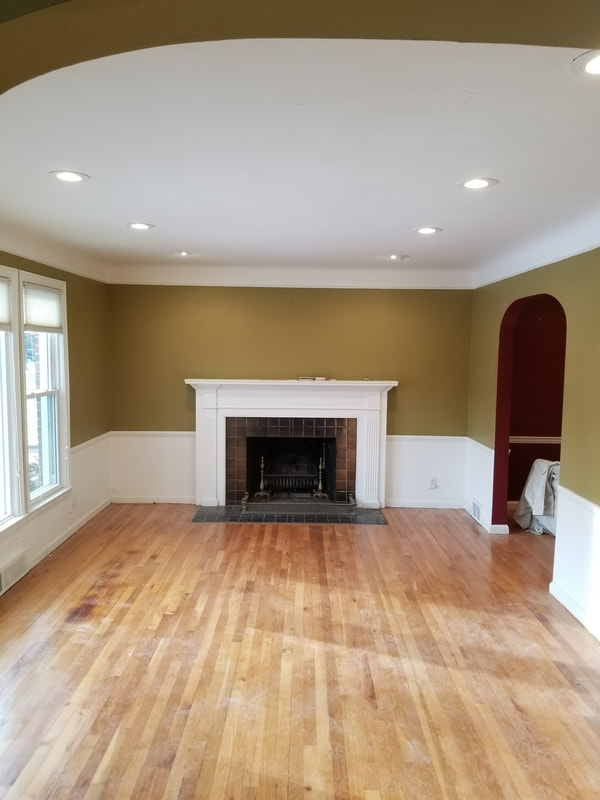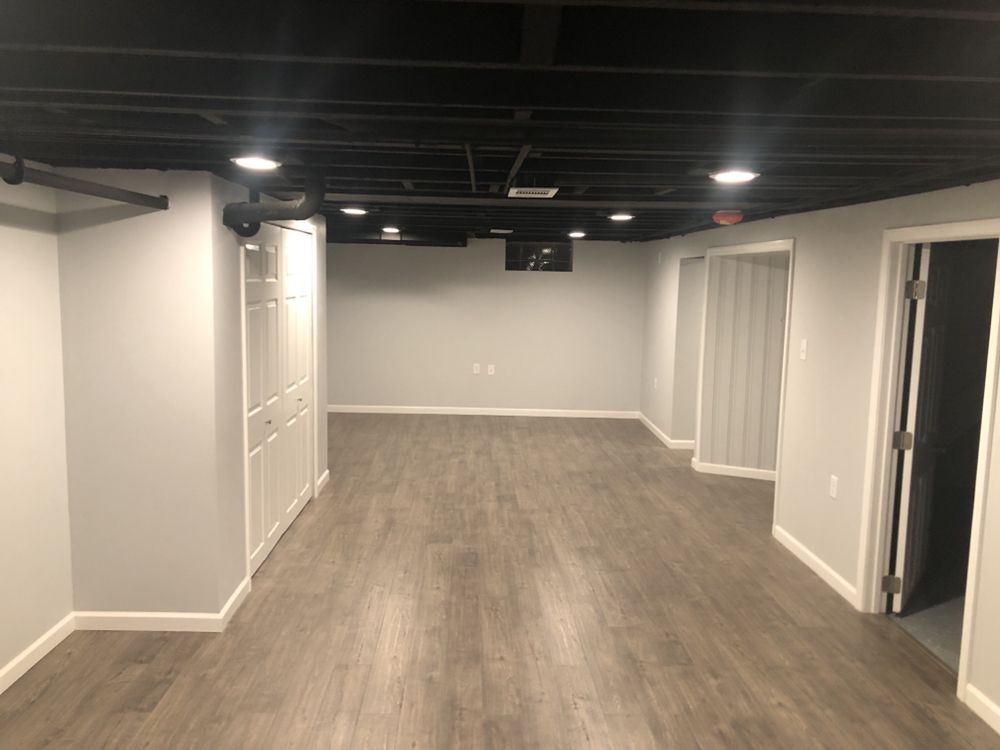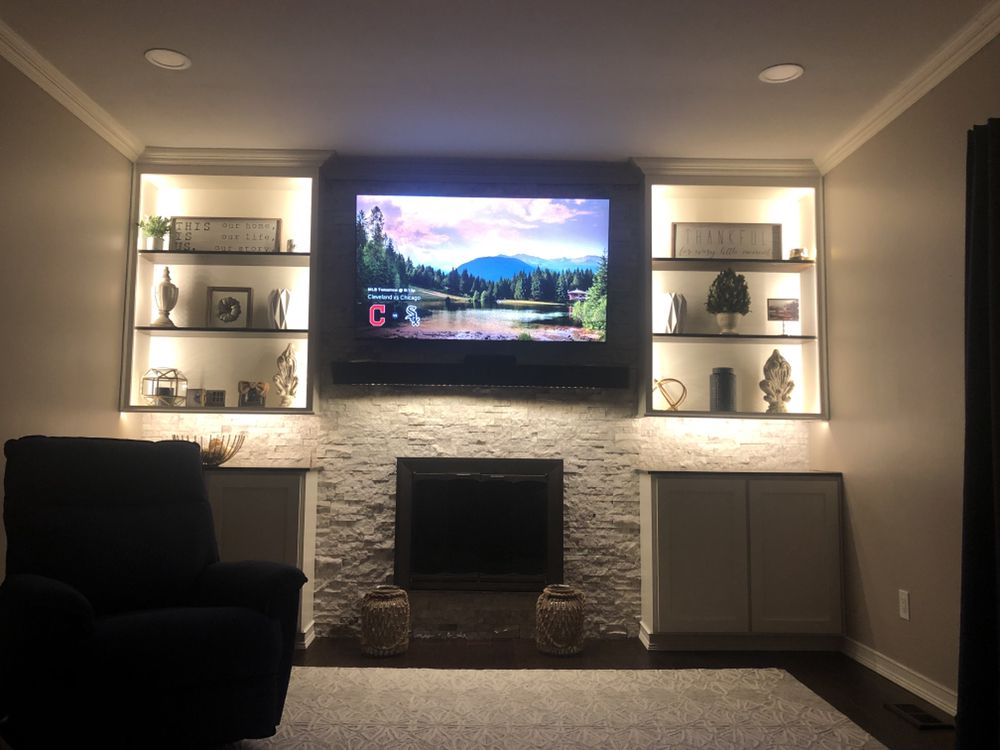
Recessed Lighting Troy, MI
Thoughtful ceiling lighting can make a Troy, MI home feel brighter, more open, and easier to use without filling the room with bulky fixtures. Recessed lighting places the light source inside the ceiling plane, creating clean general illumination, focused task lighting, or subtle accent light depending on the layout and trim selected. It is a practical option when dark corners, uneven light, low-hanging fixtures, or an outdated lighting plan are getting in the way of how a room looks and functions.
Executive Electric is located at 20504 Hall Rd, Clinton Township, MI 48038. Homeowners considering an upgrade in the Troy area can contact Executive Electric to discuss their goals, the rooms involved, and the details that should be evaluated before recessed fixtures are installed. A useful conversation starts with the way the space is used, not simply with a count of ceiling lights.
What recessed fixtures can change in a room
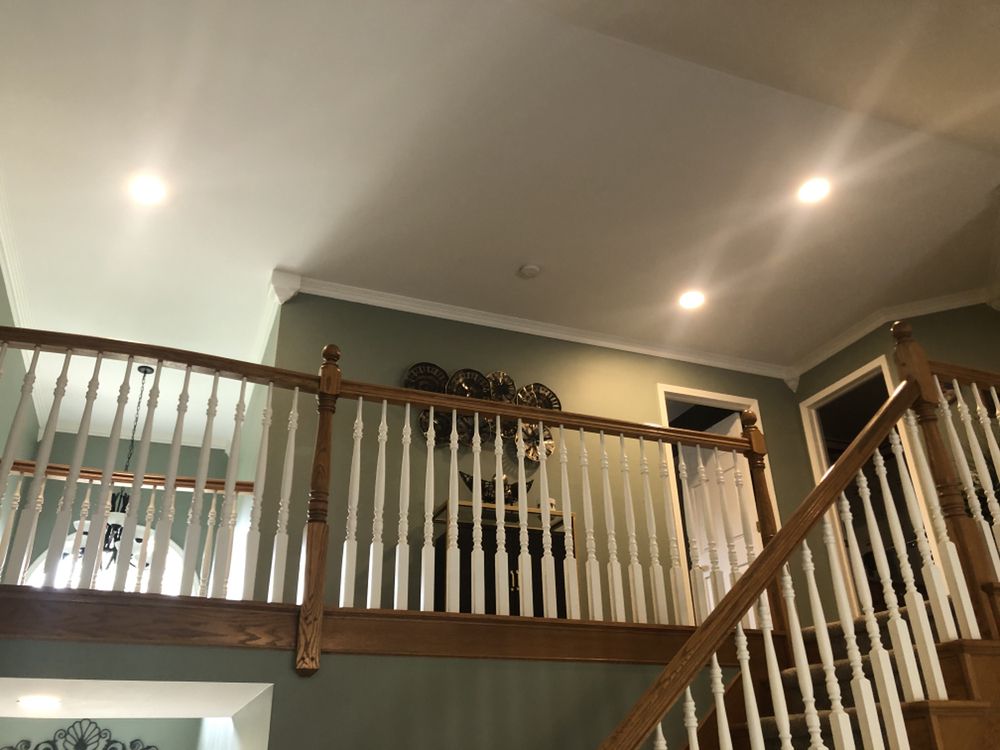
Recessed fixtures, sometimes called can lights, pot lights, or downlights, can distribute light across a ceiling while preserving visual space. Their low-profile appearance is especially useful in kitchens, family rooms, hallways, bathrooms, basements, and rooms where a pendant or chandelier would obstruct a view or compete with the design. The result should be intentional illumination rather than a ceiling dotted with lights.
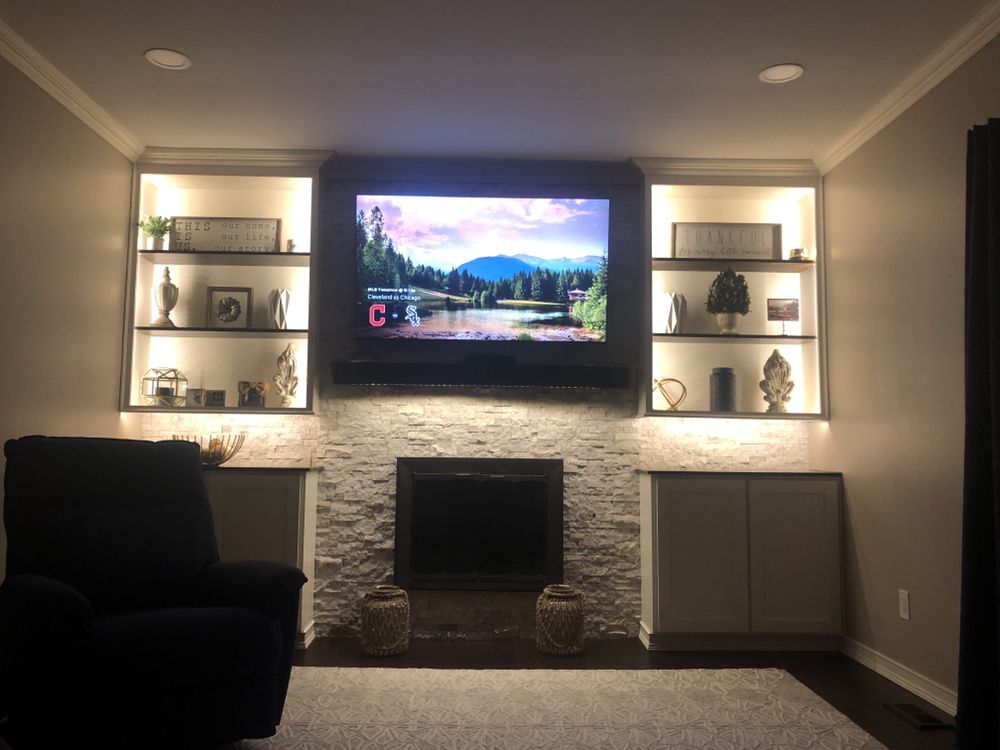
For homeowners researching recessed lighting options, the key benefit is flexibility. A lighting plan can use different fixture positions, beam spreads, trim styles, and controls to support different parts of the same room. General light helps people move through the space, while targeted downlighting can help illuminate a countertop, shower area, reading chair, artwork, or architectural feature.
A cleaner ceiling does not have to mean flat lighting
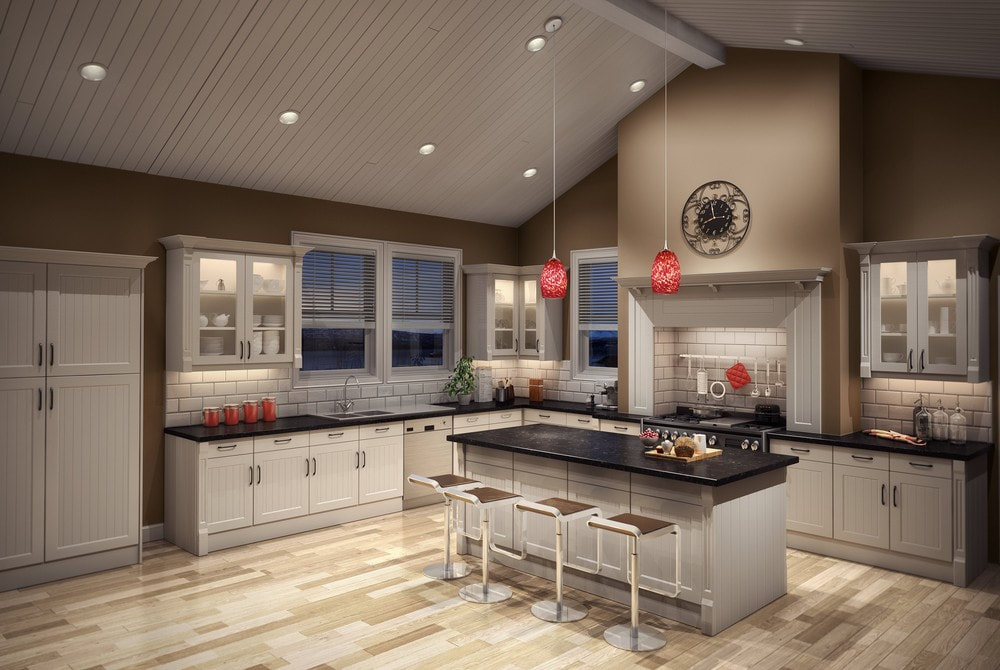
Recessed lights are unobtrusive, but their effect can be layered. In a kitchen, for example, ceiling fixtures can improve broad ambient lighting while under-cabinet lighting handles close work at the counter. In a living area, carefully placed downlights may supplement a floor lamp or decorative fixture instead of trying to replace every other source of light.
- Ambient lighting provides the overall brightness that makes a room comfortable to enter and use.
- Task lighting supports activities such as food preparation, grooming, reading, laundry, or hobby work.
- Accent lighting can draw attention to a wall, display, texture, or other visual feature when placement and beam direction suit the goal.
- Layered lighting combines sources so one switch setting does not have to serve every activity.
This distinction matters because more fixtures do not automatically produce better light. Excessive brightness can create glare, flatten the room, or make evening use less comfortable. A plan based on the room’s dimensions, surfaces, furniture, ceiling height, and daily activities is more useful than copying a fixture layout from another house.
Planning the right ceiling lighting layout
A sound recessed lighting plan considers coverage, control, ceiling conditions, and the role of each fixture before installation begins. Placement should avoid random rows and should account for where people stand, work, look, and walk. Executive Electric can be a relevant contact when a homeowner wants to talk through those decisions rather than choose fixtures based on appearance alone.
Start with the room’s actual use
Kitchen lighting often needs clear visibility over work zones, while a bedroom may benefit from softer, controllable general light. A bathroom has different concerns, including location near moisture and the need for useful mirror lighting. A finished basement may need an even layout that reduces shadows around seating, stairs, storage, or recreation areas.
Before a project, it helps to note where existing light falls short. A single centered fixture may leave perimeter areas dim. A ceiling fan light may not illuminate counters well. A room with dark finishes, high ceilings, or limited natural light may require a different strategy than a room with pale walls and generous daylight.
Choose the fixture characteristics deliberately
Recessed lighting is not one fixed product. Housing type, aperture size, trim, lamp or integrated LED design, color temperature, beam angle, and dimming compatibility all influence the finished experience. LED recessed lights are commonly selected for their energy efficiency and long service life, but the quality of light and control compatibility still deserve attention.
- Color temperature affects whether light appears warmer or cooler, which can change the mood of a room and the appearance of finishes.
- Beam spread influences whether a fixture creates broad coverage or a more focused pool of light.
- Trim style affects glare control, visual finish, and whether the light can be aimed or kept fixed.
- Dimmers can make one room adaptable for cooking, entertaining, watching television, cleaning, or winding down.
- Wet-location or damp-location ratings may be important in appropriate bathroom or exterior-adjacent applications.
It is also important to consider ceiling access and what is above the ceiling. Joists, ducts, insulation, plumbing, and existing wiring can affect locations and installation approach. In some remodels, a fixture layout needs adjustment to work with these conditions while still meeting the homeowner’s lighting goals.
What to expect from a recessed lighting project
The process generally begins by defining the rooms to be updated, identifying the desired lighting effect, and reviewing the existing electrical and ceiling conditions. That early review helps turn a broad request such as “make this room brighter” into decisions about fixture location, switching, dimming, and any complementary lighting. It also provides an opportunity to raise concerns about access, finishes, and disruption before work is planned.
- Discuss the goals: Identify problem areas, desired atmosphere, and how each room is used at different times of day.
- Review the space: Consider ceiling construction, existing fixtures, potential obstacles, and suitable control locations.
- Develop the layout: Determine a practical fixture pattern and the role each light will serve.
- Select compatible components: Consider trims, LED characteristics, dimmers, and location-appropriate ratings.
- Complete and check the work: After installation, the lighting should be evaluated for coverage, aiming where applicable, and control operation.
Homeowners should ask how ceiling openings will be handled, whether patching or painting may be needed after electrical work, and which decisions must be made before the visit. The exact scope depends on the existing structure and the planned design. Clear expectations are particularly valuable in finished rooms where cosmetic details matter as much as the new illumination.
Controls often determine whether the upgrade feels successful
Switching and dimming deserve the same attention as fixture placement. Separate controls can allow a homeowner to use only the fixtures needed for a specific activity, while dimmers give the same lights a wider operating range. Compatibility is important because not every LED fixture and dimmer combination performs the same way; flickering, limited dimming range, or inconsistent behavior are issues worth discussing in advance.
Smart controls may appeal to homeowners who want scheduling or app-based adjustments, but conventional wall controls can be the right choice when simplicity is the priority. The best option is the one that supports the household’s habits without adding complexity that will go unused.
Making an informed choice for your Michigan home
Recessed lighting can be a strong fit when ceiling space is limited, a room needs more even light, or a homeowner wants a streamlined look. It may be less ideal as the only source of light in a room that also needs personality, decorative interest, or strong vertical illumination. Wall sconces, pendants, under-cabinet fixtures, table lamps, and track lighting can each solve needs that ceiling downlights do not address as effectively.
For example, downlights are excellent for broad coverage and targeted overhead light, while pendants can add a visual focal point above an island or dining table. Under-cabinet lighting directs light onto a work surface with fewer shadows than overhead fixtures alone. A balanced design may combine these approaches instead of treating recessed fixtures as an all-or-nothing choice.
Questions worth raising before you commit
The right provider discussion should be specific to the property and the intended result. Ask how the proposed locations support the room’s use, whether the existing electrical setup affects the project, and how controls will be organized. It is also reasonable to ask what fixture characteristics are being considered and why they suit the space.
Homeowners in Michigan should avoid assuming that every ceiling can accept the same fixture pattern. Insulation, framing, access, and moisture conditions can change the details of a project. Addressing those variables early can help prevent a design decision that looks good on paper but does not serve the finished room well.
Recessed lighting questions from Troy homeowners
How many recessed lights does a room need?
The right number depends on room size, ceiling height, surface colors, natural light, fixture output, beam spread, and the tasks performed there. A useful layout considers coverage and glare, not a fixed rule about spacing. Reviewing the actual room is the best way to determine a practical plan.
Are recessed lights a good choice for a kitchen?
They can provide valuable general and task-oriented illumination in a kitchen, particularly over circulation areas and work zones. Recessed fixtures are often most effective when paired with under-cabinet lighting and, where desired, a decorative fixture over an island or table. The layout should account for cabinets and where people stand at the counter.
Can recessed lighting be added to an existing finished ceiling?
In many situations, adding fixtures to an existing ceiling may be possible, but the practical approach depends on framing, insulation, obstructions, wiring access, and the intended locations. A site-specific review is important because these conditions vary from one Michigan home to another.
Is a dimmer worth adding with LED recessed lights?
A dimmer can make LED recessed lighting more versatile by allowing brighter light for cleaning or tasks and lower light for relaxing. The fixtures and dimmer should be compatible. Discussing control preferences before installation helps ensure the lighting is convenient to use after the project is complete.
Discuss your lighting goals with Executive Electric
If uneven light, dated fixtures, or a crowded ceiling is limiting a room’s potential, a focused conversation can clarify the next step. Executive Electric can help you begin by discussing the space, your lighting priorities, and the practical details that may shape a recessed lighting project for Troy, MI. The company location is 20504 Hall Rd, Clinton Township, MI 48038.
Ready to explore a more functional lighting plan? Contact Executive Electric to discuss your project and request the information you need to make an informed decision.