Home EV charger installation St. Clair Shores, MI
Reliable charging at home starts with an electrical setup that fits both the vehicle and the house. For drivers exploring Home EV charger installation in St. Clair Shores, MI, Executive Electric provides a practical point of contact for planning a dedicated charging solution, evaluating electrical needs, and moving toward convenient everyday charging.
Executive Electric is located at 20504 Hall Rd, Clinton Township, MI 48038. St. Clair Shores homeowners can use the contact process to discuss their vehicle, preferred charger location, panel capacity, and the details that shape a safe, useful installation rather than relying on a one-size-fits-all approach.
Make everyday EV charging simpler at home
A home charger lets an EV replenish power while it is parked, so many owners begin the day with a more predictable charge and fewer routine stops at public stations. The right setup depends on driving habits, vehicle charging capability, available electrical capacity, and where the vehicle is typically parked. A professionally planned installation also helps avoid treating a major electrical load as an afterthought.
Home charging can be a strong fit for households with a garage, carport, driveway parking, or a defined parking space where a charger can be positioned sensibly. It may also benefit multi-vehicle households, commuters with consistent daily mileage, and owners who want more control over when charging occurs. The goal is not simply to add equipment, but to create a charging routine that works with the home and the vehicle.
- Charge during the hours when the vehicle is already parked at home.
- Reduce dependence on finding an available public charger for routine driving.
- Choose a location that supports comfortable cable reach and daily use.
- Plan for an EV purchase, a replacement vehicle, or changing household driving needs.
Why a dedicated circuit matters
EV charging is a sustained electrical load, which is why the circuit, overcurrent protection, wiring method, and connection type deserve deliberate review. A dedicated branch circuit is commonly used so the charger has electrical capacity assigned to its intended purpose. The installation plan should account for the charger manufacturer’s instructions and applicable electrical requirements, rather than assuming an existing receptacle is automatically suitable.
An EV charging outlet installation can be appropriate when the selected charging equipment is plug-in rather than hardwired. The outlet type and circuit rating need to match the equipment requirements, and the receptacle location should support safe connection and cable management. A plug-in arrangement can make equipment replacement more straightforward, but it still requires the same careful attention to circuit design and installation quality.
Level 1, Level 2, and public charging are different tools
Standard 120-volt charging can work for low daily mileage or extended parking periods, but it is generally slower than a 240-volt option. Public charging can supplement trips and provide access away from home, although station availability and time spent charging vary. For many households, a home-based higher-capacity charger creates the most convenient solution for routine use while public charging remains a travel resource.
Level 2 EV charger installation generally refers to adding the 240-volt charging arrangement many EV owners choose for faster at-home replenishment. Actual charging speed is influenced by the vehicle’s onboard charger, the EVSE rating, circuit capacity, and the installation configuration. Selecting Level 2 is therefore a practical decision about overnight charging needs and electrical suitability, not a promise that every vehicle will charge at the same rate.
What Executive Electric needs to consider before installation
A productive planning conversation begins with the vehicle or charger model, the desired parking location, and a clear look at the electrical system. Panel capacity and existing loads can affect whether a new circuit can be added directly or whether additional electrical work should be considered. Distance from the panel to the charger location, routing options, and whether the charger will be indoors or outdoors also shape the final scope.
- Define the charging goal. Identify the vehicle, expected daily driving, and whether overnight charging is the priority.
- Select the equipment approach. Decide between hardwired equipment and a compatible plug-in unit, based on the charger and site.
- Review the electrical system. Assess panel space, service capacity, existing loads, and the path for new wiring.
- Plan the charger location. Confirm cable reach, parking position, mounting surface, and protection from physical damage where needed.
- Complete installation and final checks. The finished setup should be evaluated for correct connection and operation before becoming part of the household routine.
Understanding 240-volt charging at a residence
240V EV charger installation is the electrical work that supports many Level 2 charging systems in a residence. It typically involves a properly sized dedicated circuit from the electrical panel to the charger or compatible receptacle, with conductor sizing and protection based on the equipment and installation conditions. Because homes differ in panel capacity, wiring routes, and load demand, a 240-volt plan should be based on the actual property rather than a generic package assumption.
Electrical load calculation is particularly important when a panel already supports major appliances, heating or cooling equipment, or other high-demand loads. Sometimes the existing electrical service has room for the additional demand, while other homes may need a different approach before a charger circuit is added. Executive Electric can be contacted to discuss the site-specific factors that should be reviewed for a Michigan home.
Hardwired equipment and plug-in chargers
Hardwired charging equipment is connected directly to the dedicated circuit, while plug-in equipment uses a properly installed compatible receptacle. Neither arrangement is automatically right for every property. The charger’s instructions, electrical rating, desired flexibility, location conditions, and the homeowner’s future plans should guide the choice.
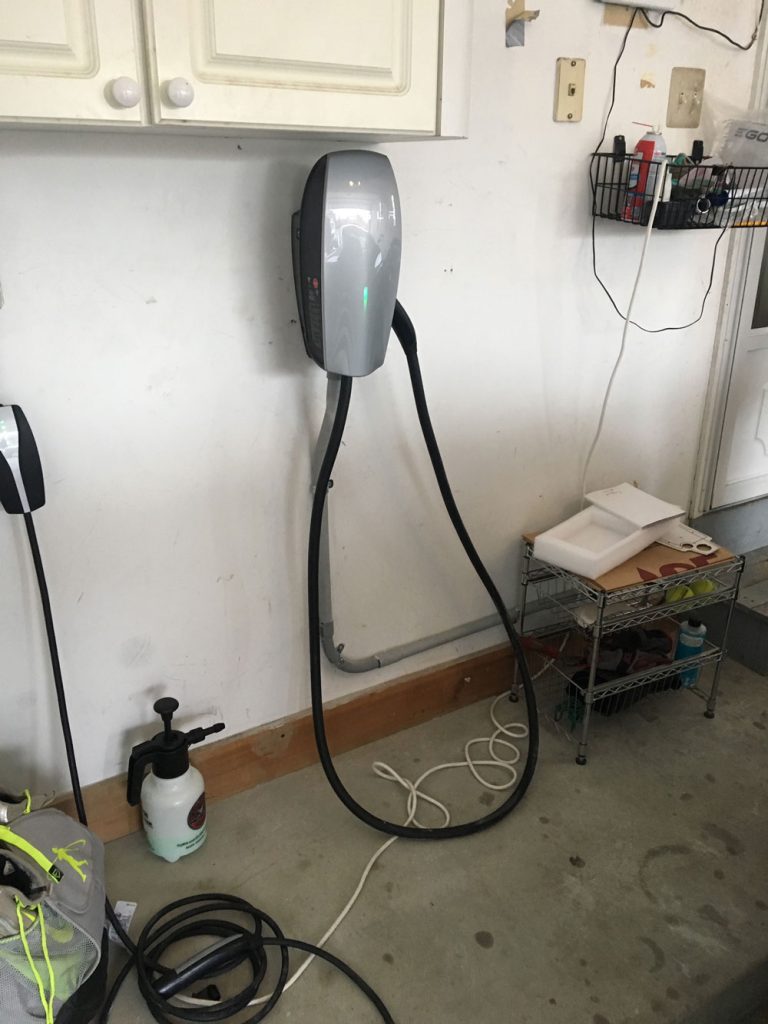
A Home charging station is more than the wall-mounted box or cable visible near the parking area. The usable station includes the charger or EVSE, the dedicated electrical supply, suitable circuit protection, and a location that allows the cable to reach the vehicle without creating an avoidable obstacle. Considering the whole system helps homeowners compare options based on daily usability instead of focusing only on the equipment purchase.
Vehicle-specific planning and practical placement
Different EVs can have different connector needs, onboard charging limits, and manufacturer guidance. Charger selection should account for the vehicle in use today while leaving room for reasonable future flexibility. A well-considered mounting location can also keep the cable accessible without stretching it across a walkway or relying on an extension cord.
Tesla charger installation requires attention to the selected Tesla charging equipment, the vehicle connection arrangement, and the electrical specifications for that equipment. Some owners choose dedicated Tesla hardware, while others may prioritize equipment intended to serve different current or future vehicles. Reviewing the planned charger before electrical work begins helps align the circuit, connection method, and placement with the equipment that will actually be used.
Outdoor installations deserve special attention to equipment ratings, weather exposure, mounting, and routing. Indoor garage locations can simplify protection from the elements, but they still need thoughtful placement around vehicles, storage, and doors. In either setting, the final location should support ordinary parking behavior, not require a daily workaround.
A residential project should be built around the household
Residential EV charger installation should reflect how a household actually uses its vehicles and electrical system. A family that drives modest distances may prioritize convenient overnight charging, while a high-mileage driver may place more value on faster replenishment and a carefully evaluated higher-capacity circuit. The property layout, planned vehicle changes, and existing electrical demand all inform a solution that is functional beyond the first week of ownership.
Before choosing a provider, homeowners can prepare useful details such as photographs of the electrical panel and parking area, charger product information, and a description of where the vehicle normally parks. They can also clarify whether they prefer hardwired equipment or a receptacle, whether outdoor placement is needed, and whether the panel has known capacity concerns. These details help make the conversation more focused and help identify factors that may affect the project scope.
Choose a clear path toward home charging
Executive Electric offers St. Clair Shores, MI homeowners a direct way to begin planning an EV charging project with a company located at 20504 Hall Rd, Clinton Township, MI 48038. The value of an early conversation is clarity: it connects the vehicle, charger, parking arrangement, and electrical system before equipment or installation decisions are finalized. That clarity can help homeowners choose an approach that makes practical sense for their Michigan property.
Contact Executive Electric when you are ready to discuss a new charger circuit, a plug-in charging outlet, hardwired equipment, or the electrical considerations behind a future EV purchase. Share the charger model if one has been selected, or explain the charging routine you want to achieve. A focused discussion is the next step toward dependable charging at home.
Contact Executive Electric to discuss your St. Clair Shores home EV charger installation. Executive Electric is located at 20504 Hall Rd, Clinton Township, MI 48038 and can help start the conversation about the electrical details of your planned charging setup.
Home EV charger installation questions
How long does a home EV charger installation take?
Installation time varies with the electrical panel, wiring distance, charger type, access to the route, and whether additional electrical work is needed. A straightforward nearby circuit may differ significantly from a project involving panel capacity review, a long wiring run, or outdoor equipment, so the property should be evaluated before setting expectations.
Do I need a Level 2 charger for my EV?
Not every owner needs Level 2 charging. A 120-volt option may suit limited daily driving, while a 240-volt Level 2 setup is often chosen by owners who want quicker overnight replenishment. The right choice depends on vehicle capability, daily mileage, parking time, and the home’s electrical capacity.
Can an EV charger be installed outside?
Outdoor charging can be possible when the equipment is suitable for the environment and the electrical installation is planned for weather exposure, mounting, cable routing, and vehicle access. The charging location should also minimize trip hazards and protect the equipment from avoidable physical damage.
What should I have ready before contacting Executive Electric?
Have the EV make and model, desired charger information if available, a description of the parking location, and any known details about the electrical panel. Photos of the panel and intended charger area can also help frame the conversation. Executive Electric is located in Clinton Township, Michigan, at 20504 Hall Rd, MI 48038.