Commercial EV charger installation Shelby Township, MI
Businesses planning for electric vehicles need charging that fits how people actually park, work, shop, and travel. Commercial EV charger installation in Shelby Township, MI helps property owners create a practical charging experience while addressing electrical capacity, equipment selection, placement, and future expansion before construction begins.
Executive Electric is located at 20504 Hall Rd, Clinton Township, MI 48038. For a Shelby Township business, a conversation with Executive Electric can clarify the electrical and site-planning questions that affect a commercial charging project, without assuming that one charger type or layout suits every property.
Commercial charging can serve employee vehicles, customer visits, fleet operations, tenant amenities, or a combination of these needs. A well-considered project starts by defining the users, dwell time, number of ports, access rules, and operating priorities, then matching those requirements to the building and electrical infrastructure.
Plan charging around the way your property is used
The right commercial EV charging system is determined by use case, not just by the number of parking spaces. A workplace where vehicles remain parked for much of the day may have different needs than a retail site seeking shorter visitor charging sessions or an operational fleet that must return to service on a schedule.
Start with users, parking patterns, and goals
Before selecting equipment, identify who will use the stations and when. Employees, residents, customers, guests, and fleet drivers can have very different charging windows, and those windows influence the appropriate power level, number of connectors, access controls, and signage.
- Employee and tenant charging: Often benefits from charging during longer parking periods and a layout that is easy to access during the workday.
- Customer and visitor charging: May prioritize visible locations, simple instructions, reliable circulation, and clear parking expectations.
- Fleet charging: Requires planning around vehicle return times, route demands, charging rotation, and operational downtime.
- Mixed-use properties: Need rules that balance access among several groups while preserving usable parking and safe traffic flow.
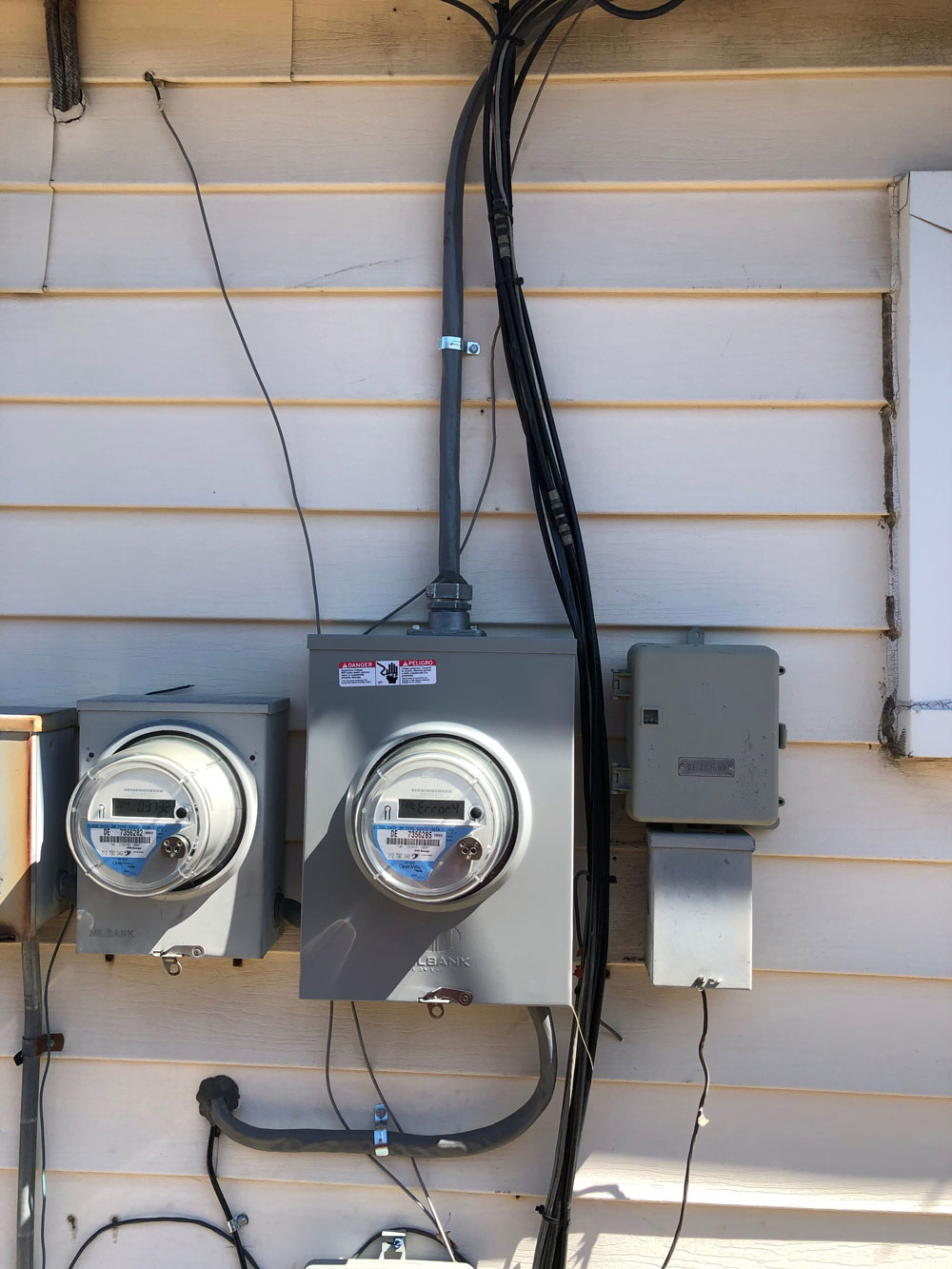
Electrical infrastructure is a central part of commercial EV charger installation. A project may require review of the existing service, panel capacity, available circuits, feeder routing, trenching or surface pathways, and the distance between the electrical source and the proposed stations. Addressing these questions early helps a property owner compare options based on realistic site conditions rather than an equipment price alone.
Choose a charging level that matches dwell time
Level 2 equipment is commonly considered when vehicles can remain parked for hours, while DC fast charging is intended for substantially faster charging where the vehicle and site support it. Faster equipment can demand more electrical capacity and may change design, utility coordination, equipment cost, and installation complexity. The practical question is not simply how fast a charger can operate, but whether that speed supports the users and business purpose of the location.
Future-ready planning can also be more valuable than installing the maximum possible number of chargers immediately. Conduit pathways, electrical room considerations, parking layout, and space for later equipment can make phased expansion easier when demand grows. A scalable plan lets a business prioritize current needs while keeping later decisions open.
What a commercial charging project typically involves
A commercial charging project typically moves from site evaluation and load planning to equipment decisions, permitting, installation, testing, and turnover. Each property has its own constraints, so the sequence may vary, but a disciplined process reduces surprises and gives decision-makers a clearer view of the work ahead.
- Define the objective. Establish the expected users, desired charging access, operational schedule, and whether the project is intended for current demand, future growth, or both.
- Review the site. Consider parking configuration, electrical distribution, possible equipment locations, routing options, clearances, accessibility considerations, and vehicle movement.
- Develop the electrical approach. Assess available capacity and determine what distribution equipment, feeders, protective devices, or service-related work may be needed.
- Select equipment and controls. Compare connector needs, power output, network features, payment or access options, monitoring, and expansion compatibility.
- Coordinate approvals and install. Follow applicable permitting and inspection requirements, complete the electrical work, mount and connect equipment, then test operation before use.
Property owners should also consider who will oversee the stations after installation. Questions about user access, payment settings, charging policies, maintenance responsibilities, parking enforcement, and driver communication are operational decisions, not merely technical details. Planning for them before opening day helps the charging area function as intended.
Workplace charging can support employees and operations
Workplace EV charger setup is most useful when it aligns with employee schedules, the available parking supply, and the organization’s access policies. A business may choose open employee access, restricted use, assigned spaces, or a managed arrangement depending on its goals. Planning should account for where employees park, how long cars remain on site, and how charging spaces will be communicated and managed.
For offices, industrial sites, medical workplaces, and other employment settings, charging can be an amenity that supports drivers who cannot conveniently charge at home. The installation approach should still protect normal operations. Equipment placement, cable management, traffic patterns, and the timing of electrical work all deserve consideration so the project supports the workplace instead of creating avoidable disruption.
Public-facing stations need a clear visitor experience
A Public EV charger installer discussion should address visibility, access hours, user instructions, parking turnover, and the role charging plays in the overall customer experience. Public or customer-accessible stations can attract different kinds of drivers than private workplace stations, so owners should decide whether the goal is broad access, customer convenience, a tenant benefit, or a more controlled program. Clear site rules and a location that drivers can enter and exit safely are as important as the charger itself.
Public-facing charging also brings a useful tradeoff into focus. Highly visible spaces can make stations easier to find, but they may be among the property’s most valuable parking positions. A site review can help weigh visibility against circulation, accessible routes, electrical routing distance, and the day-to-day impact on parking availability.
Equipment placement and charging speed deserve careful comparison
Commercial charging decisions are connected. The selected hardware affects electrical demand, while the desired location affects the length and complexity of electrical runs. Comparing these elements together helps a Shelby Township, MI property owner avoid choosing equipment first and discovering later that the preferred placement requires a different approach.
Dock location affects safety, access, and installation scope
EV charging dock installation involves more than mounting a unit beside a parking space. The proposed location should allow drivers to park normally, reach the connector without creating a trip or traffic concern, and protect equipment from foreseeable vehicle contact. Site conditions may call for wall-mounted units, pedestal-mounted equipment, protective bollards, curbside placement, or other layout choices based on the property design.
Thoughtful placement can also simplify service access and keep cable paths orderly. Businesses should consider snow removal practices, drainage, lighting, wayfinding, and how the equipment will be used after dark. These details help turn a charging station from a piece of equipment into a usable part of the property.
Fast charging is not automatically the best commercial choice
EV fast charger installation may be appropriate when drivers need significant energy in a shorter stop and the site can support the associated electrical demand. DC fast charging can be a strong fit for certain fleet, destination, or high-turnover applications, but it generally requires more intensive planning than lower-power alternatives. The equipment choice should be based on vehicle dwell time, expected utilization, infrastructure capacity, and the business case for faster charging.
For many properties, Level 2 charging is a reasonable alternative because it can align with longer parking periods and may be less demanding on the electrical system. Neither option is universally better. An informed comparison considers charging behavior, future growth, construction scope, operating goals, and whether users need speed, availability, or a balance of both.
Questions to resolve before selecting a provider
A commercial electrical project benefits from direct, practical questions. A provider conversation should help you understand the project scope, not pressure you into a one-size-fits-all package. Executive Electric can be a relevant contact for businesses evaluating commercial EV charging infrastructure in the Shelby Township area and seeking to organize those early decisions.
- What charging use case is the property trying to support, and how many vehicles may need access at the same time?
- What does the existing electrical service and distribution system reasonably support?
- Where can equipment be located without compromising parking flow, access, or maintenance needs?
- What equipment features are important, such as access control, networking, monitoring, or payment capability?
- What should be installed now, and what pathways should be prepared for a future phase?
- What permitting, inspection, utility, or property-management coordination may be part of the project?
When evaluating a proposal, look beyond the charging unit itself. The electrical work, routing method, site restoration needs, protective measures, controls, and expansion plan can all affect the total scope. A clear discussion of assumptions and site conditions gives decision-makers a better foundation for comparing approaches.
In a normal project discussion, commercial EV charger installation should be considered as an integrated property improvement rather than a standalone appliance purchase. The strongest plan connects driver needs with electrical capacity, parking design, and operational policies. That approach can help Michigan businesses make a more confident decision about the charging experience they want to provide.
Frequently asked questions
How long does commercial EV charger installation take?
Timing depends on the existing electrical system, equipment type, equipment location, permitting requirements, and whether service or distribution upgrades are needed. A straightforward installation and a project involving long runs, civil work, or higher-power charging will have different schedules. A site-specific review is the best way to identify likely steps and dependencies.
Is Level 2 or DC fast charging better for a commercial property?
Level 2 is often suitable when vehicles park for several hours, such as at workplaces or longer-stay properties. DC fast charging is better suited to shorter charging stops when the site has adequate capacity and the business case supports higher-power equipment. The best choice depends on dwell time, user demand, electrical infrastructure, and growth plans.
Can a business prepare for more chargers without installing them all now?
Yes. A phased strategy can include planning electrical capacity, conduit routes, equipment locations, and parking layout for future stations while installing only the chargers currently needed. This approach can help preserve expansion options and avoid reopening finished areas later, subject to the property’s specific electrical and construction conditions.
Does Executive Electric have an office in Shelby Township, Michigan?
Executive Electric is located at 20504 Hall Rd, Clinton Township, MI 48038. The company’s Shelby Township, MI service page is intended for businesses seeking information and a contact point for commercial EV charging discussions in the surrounding market. Contact Executive Electric to discuss your property, goals, and project considerations.
Ready to evaluate commercial charging for your property?
Whether your goal is employee charging, customer access, fleet readiness, or a phased infrastructure plan, start with the operational and electrical questions that shape the project. Contact Executive Electric at its 20504 Hall Rd, Clinton Township, MI 48038 location to discuss Commercial EV charger installation needs for your Shelby Township property.