Commercial EV charger installation Mount Clemens, MI
Businesses planning Commercial EV charger installation Mount Clemens, MI need more than a charger mounted near a parking space. The project must account for how drivers will use the equipment, what the building’s electrical system can support, where vehicles can park safely, and how the installation will be managed over time. Executive Electric is located at 20504 Hall Rd, Clinton Township, MI 48038, and is a practical contact for organizations that want to begin a thoughtful conversation about an EV charging project.
From employee parking to customer-facing stations and fleet electrification, commercial charging can help a property respond to changing transportation needs. A well-planned system gives drivers a dependable place to charge while helping the property owner avoid avoidable capacity, layout, and equipment-selection issues. The right approach starts with the property’s goals, not with a one-size-fits-all charger choice.
Build a charging plan around the way your property operates
Commercial EV charging is an electrical infrastructure project that should fit the daily rhythm of the site. A workplace with vehicles parked for eight hours may prioritize a different charging speed than a retail location where drivers stop briefly, while an electrified fleet may need predictable charging windows and capacity planning. Defining the user group early helps determine the number of ports, charging levels, access controls, and future expansion strategy.
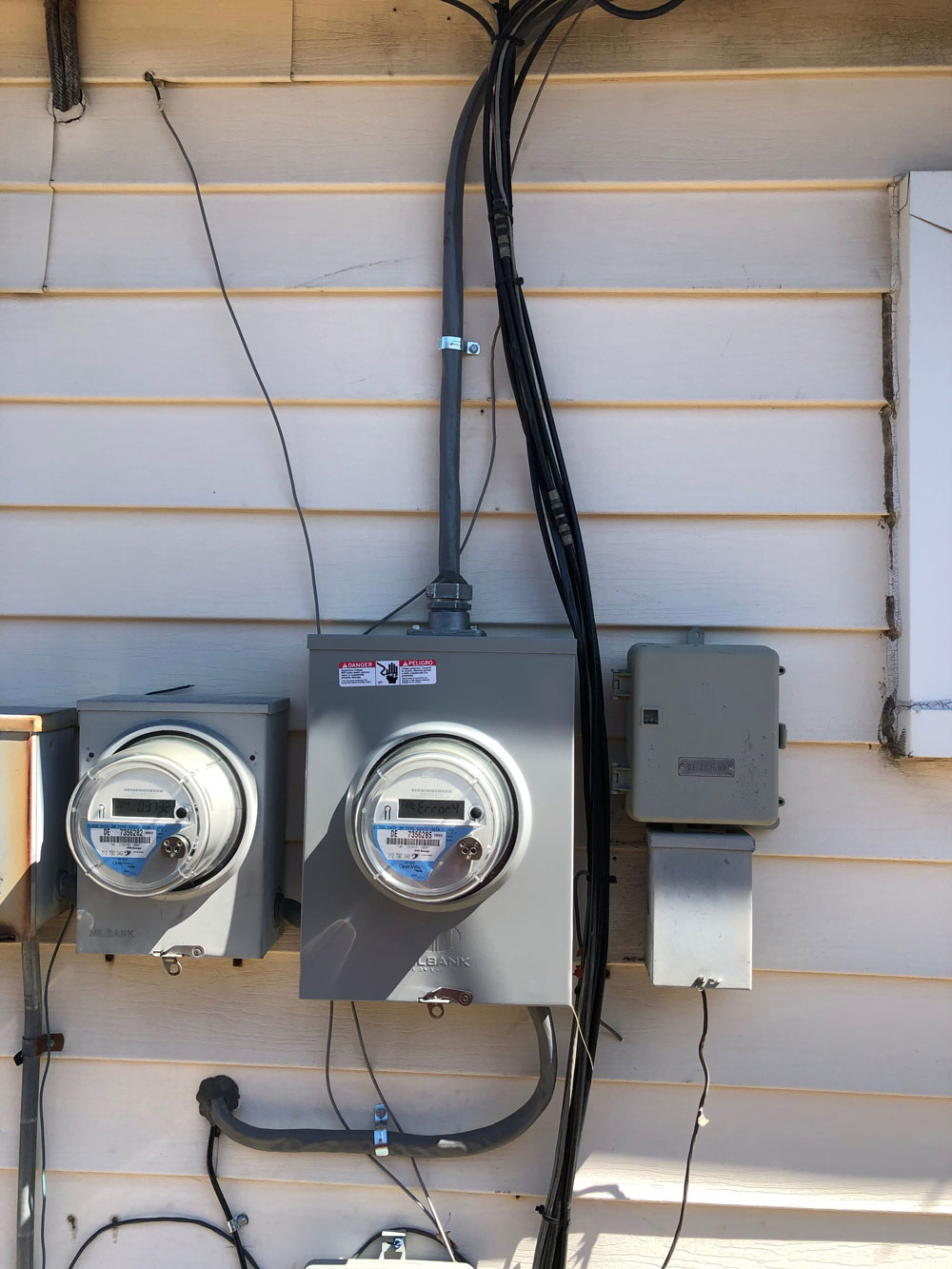
Executive Electric can help prospective property owners and managers frame the questions that shape a useful installation discussion. Before selecting equipment, it is helpful to understand the existing electrical service, potential panel capacity, distance from the electrical source to the parking area, and whether trenching or surface-mounted raceways may be necessary. These details influence the project scope far more than the charger housing alone.
- Employee, customer, tenant, visitor, or fleet charging needs
- Expected dwell time and the appropriate charging speed
- Available electrical capacity and potential load-management needs
- Parking layout, ADA considerations, bollards, and vehicle circulation
- Networked features, user access, payment options, and operating responsibilities
- Space and electrical planning for additional chargers later
Start with the charging use case, not the equipment label
Choosing between Level 2 charging and DC fast charging depends on how long vehicles will remain onsite and how much energy they need during that stay. Level 2 equipment is commonly considered when vehicles will have longer parking periods, while higher-output DC charging is intended for shorter turnaround needs and can require more substantial electrical infrastructure. A property does not automatically need the fastest available option to create a useful experience for drivers.
A realistic demand estimate also prevents two common problems: installing too little charging capacity for foreseeable use or paying for electrical infrastructure that does not match actual operations. Consider the current number of EV-driving users, anticipated growth, business hours, vehicle turnover, and whether chargers will be available to the public or reserved for a defined group. Commercial electrical installation decisions are easier to defend when they follow documented operational needs.
Workplace charging can support employees and facility planning
Workplace EV charger setup gives employers an opportunity to make charging available where employees leave their vehicles for much of the day. The program design matters as much as the wiring: employers should decide who can use the stations, whether charging is free or managed, how spaces will be marked, and what happens when a vehicle remains parked after charging is complete. Establishing these expectations helps reduce parking friction and makes the equipment easier to manage.
For offices, industrial properties, medical facilities, and multi-tenant workplaces, charging can be introduced in phases rather than built all at once. Preparing conduits, electrical capacity, or parking areas for future ports may make expansion less disruptive than revisiting finished pavement later. The best phase-one plan leaves room for change without requiring a property to overbuild before demand exists.
Customer-facing stations require a clear access strategy
A Public EV charger installer conversation should begin with the customer experience the property intends to provide. Public or customer-accessible stations may involve decisions about hours of access, signage, lighting, parking enforcement, pricing, network connectivity, and who responds when a driver has a question. These operational choices help a business select equipment and a location that work with, rather than against, normal traffic patterns.
Customer charging can be a better fit for some destinations than others. Businesses should consider whether visitors typically stay long enough to charge meaningfully and whether reserved EV spaces could affect high-demand parking at certain times. Clear wayfinding and placement near visible, practical parking areas can support usability, but chargers should not obstruct fire lanes, loading activity, accessible routes, or everyday circulation.
What commercial charger installation typically involves
A successful commercial EV charging project moves from assessment to design, permitting and installation, followed by testing and operational handoff. The exact sequence varies with the property, charger type, local requirements, utility considerations, and the condition of the electrical system. Early coordination helps identify issues before equipment is ordered or parking areas are disrupted.
- Clarify goals: Identify intended users, desired charging availability, target opening date, and plans for future ports.
- Review the site: Evaluate electrical service, panels, pathways, parking configuration, equipment location, and physical protection needs.
- Select a solution: Match charger output, connector compatibility, networking features, and access controls to the project’s use case.
- Plan approvals and construction: Account for permits, applicable inspections, utility coordination when needed, and safe routing of electrical infrastructure.
- Install and verify: Complete the electrical work, mount equipment, protect the installation where appropriate, test operation, and confirm the site is ready for users.
Installation work can include panel modifications, feeders, branch circuits, conduit, underground pathways, pedestals, wall-mounted units, protective bollards, and restoration of affected surfaces. The site conditions determine which elements are needed. Asking for a clear scope that distinguishes electrical infrastructure from charger hardware, parking improvements, and networking services can make proposals easier to compare.
Dock placement and physical protection matter
An EV charging dock installation should place the charger and cable where drivers can reach the vehicle inlet without creating a trip hazard or interfering with adjacent spaces. Equipment location should also account for vehicle impact protection, weather exposure, accessible routes, service access, and the cable length provided by the selected unit. Thoughtful placement protects the investment and makes the station more intuitive for first-time users.
Parking geometry is especially important when chargers serve different vehicle types. A location that works for one vehicle may be awkward for another depending on which side the charging port is located. During site planning, it is useful to visualize actual parking positions, cable routing, door swing, pedestrian travel, snow storage, and delivery activity instead of relying only on an empty-space diagram.
When faster charging makes sense, and when it may not
EV fast charger installation is generally considered when a business needs to deliver a larger amount of energy during a shorter stop. This can be relevant for fleets with tight return-to-service schedules, customer destinations with limited dwell time, or sites designed around rapid charging access. Faster charging equipment can bring higher electrical demand and more complex infrastructure requirements, so it should be evaluated against actual vehicle turnover and business goals.
For many commercial sites, several well-located Level 2 ports may provide more practical value than one high-output station. The decision depends on how many vehicles need charging, how long they remain parked, and whether the property can support the necessary electrical load. Load management may also be worth discussing when multiple chargers share a constrained electrical service, because it can coordinate charging demand rather than assuming every port will draw maximum power at once.
Businesses comparing proposals should ask what charger output is recommended and why, whether the existing service has been evaluated, what civil work is included, how future expansion would be handled, and what user-management features the equipment supports. It is also sensible to ask how the design addresses inspections, equipment access for maintenance, and parking-space protection. Answers to these questions reveal whether the plan has been built around the property’s operations.
A practical partner for planning commercial charging
Executive Electric provides a local point of contact from 20504 Hall Rd, Clinton Township, MI 48038 for organizations evaluating commercial charging infrastructure. Rather than treating every project as identical, a productive initial discussion can focus on the property’s electrical starting point, the intended drivers, and the outcomes the organization wants from the investment. This helps establish a clearer path before decisions are made about charging hardware or construction scope.
For a Mount Clemens, MI business, gathering a few details before making contact can make the conversation more productive. Bring photos or a simple site plan if available, identify the parking spaces under consideration, note the location of electrical panels, and describe how long vehicles typically remain onsite. If the project involves a fleet, include vehicle types, charging windows, and expected growth plans.
Ready to explore a commercial charging solution that fits your property? Commercial EV charger installation planning with Executive Electric can begin with the needs of your Michigan facility, your parking layout, and your electrical infrastructure. Contact Executive Electric to discuss your project and next steps from its Clinton Township, MI location at 20504 Hall Rd, 48038.
Commercial EV charging questions
What is the first step in planning commercial EV charger installation?
Start by defining who will charge, how long vehicles normally park, and how many ports are needed now and later. Then evaluate the property’s electrical service, panel capacity, parking layout, and equipment locations. Those findings guide charger selection, infrastructure scope, approvals, and a plan that fits daily operations.
Does every business need a DC fast charger?
No. DC fast charging can suit short-stop destinations and vehicles that need rapid energy delivery, but it can require greater electrical capacity and more extensive infrastructure. Businesses with employees, tenants, or customers parked for longer periods may find Level 2 charging better aligned with their needs and budget.
Can commercial EV chargers be installed in phases?
Yes. A phased approach can install an initial number of ports while considering conduit routes, parking space layout, and electrical capacity for future expansion. Planning ahead may reduce disruption when demand grows, but the appropriate approach depends on the building’s current electrical conditions and operational goals.
Is Executive Electric located in Mount Clemens, Michigan?
Executive Electric’s supplied location is 20504 Hall Rd, Clinton Township, MI 48038. Businesses seeking Commercial EV charger installation in Mount Clemens, MI can contact Executive Electric to discuss their property, charging objectives, and whether the project is an appropriate fit.