EV Charger Electrical Panel Upgrade Grosse Pointe Woods, MI
An EV charger can make daily driving simpler, but the charger is only as dependable as the electrical system supplying it. For homeowners evaluating an EV Charger Electrical Panel Upgrade in Grosse Pointe Woods, MI, the central issue is whether the existing panel, service capacity, and available circuit space can safely support the charger alongside normal household loads. Executive Electric is based at 20504 Hall Rd, Clinton Township, MI 48038 and provides a clear point of contact for discussing your project and electrical needs.
A panel upgrade is not automatically required for every Level 2 charger installation. It becomes an important consideration when a home’s electrical service has limited capacity, the panel is full, equipment is aging, or a formal load calculation shows that adding sustained charging demand would exceed what the system can reasonably handle. Reviewing those factors before equipment is installed helps avoid a charger that trips breakers, competes with major appliances, or cannot operate at the charging rate you expected.
When an EV charger may require more panel capacity
Level 2 charging uses a dedicated 240-volt circuit and typically draws power for extended periods. That continuous demand is very different from briefly running a countertop appliance, so the charger circuit, breaker, conductor sizing, panel bus rating, service equipment, and calculated household load all matter. An electrical assessment identifies whether the present setup supports the planned charger or whether a panel or service upgrade should be considered first.
Many homes have ample room for an EV circuit, while others have a panel that is already committed to heating and cooling, laundry, cooking, water heating, or workshop equipment. The answer depends on the property and the intended charging configuration, not simply on the age of the home or the amperage printed on a panel door. A professional review is the sensible path when the electrical system must accommodate another major load.
Signs your existing electrical panel deserves a closer review
Limited breaker positions are one visible concern, but available spaces do not by themselves prove that enough electrical capacity remains. A panel can have open slots while the service load calculation still limits the size of an additional circuit. Conversely, an appropriately sized system may support charging without replacing the entire panel.
- The panel has no practical room for a new dedicated double-pole breaker.
- Existing breakers trip, lights flicker, or electrical equipment behaves inconsistently when large loads operate.
- The home uses several high-demand electric appliances, such as electric heat, a range, dryer, hot tub, or central air conditioning.
- You want faster charging than a lower-amperage circuit could provide.
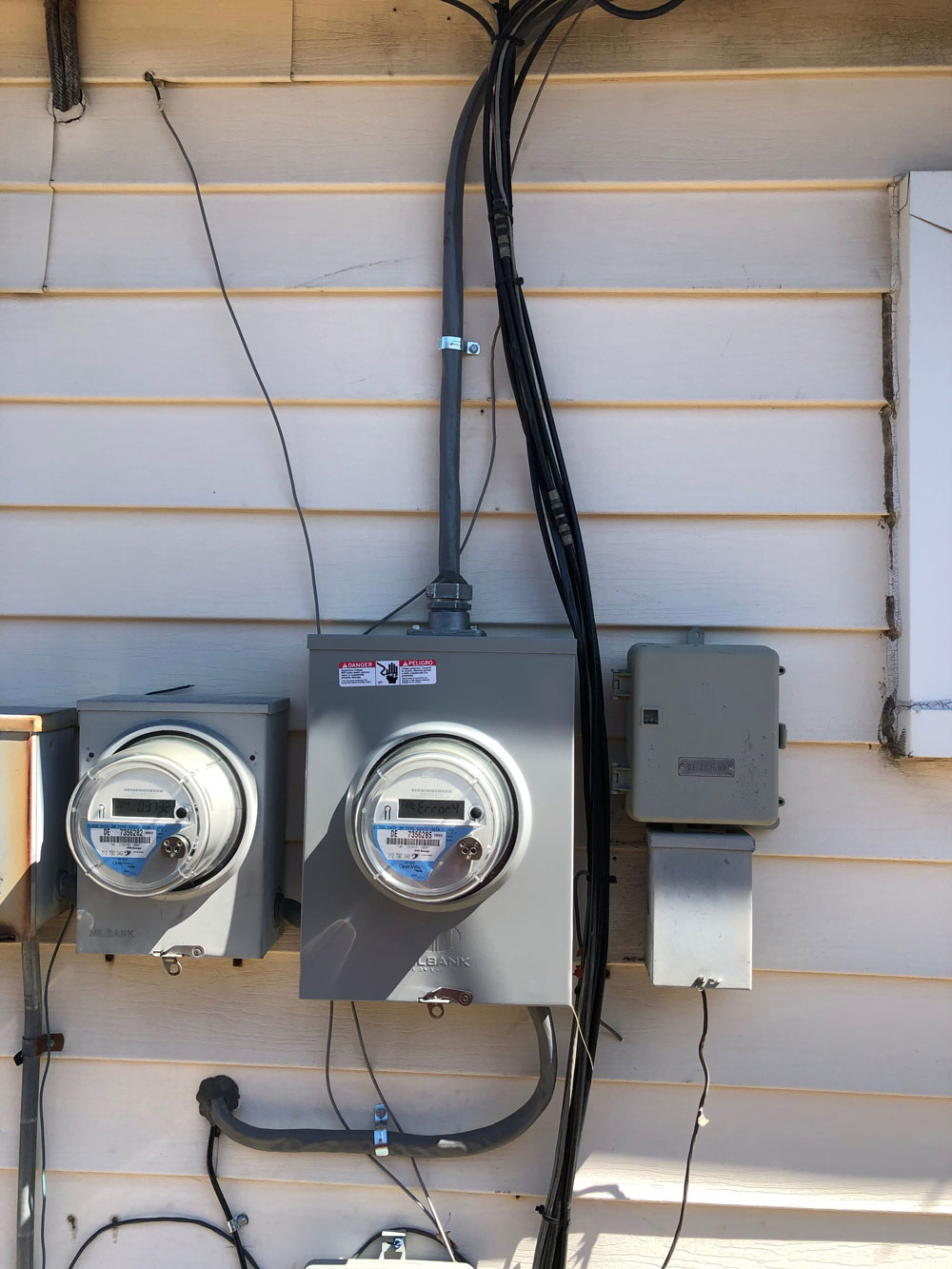
- The panel, meter equipment, or service components appear outdated, damaged, or have a condition that should be evaluated before expansion.
These indicators do not establish a diagnosis on their own. They are useful reasons to arrange a site-specific review, where the electrical configuration and expected charging load can be considered together. An assessment also helps separate a need for added circuit space from a need for greater service capacity, which are related but not identical decisions.
What an electrical panel upgrade can accomplish
An electrical panel upgrade replaces or modernizes the distribution point that routes electricity to branch circuits. For EV charging, the objective is to create a safe, properly planned path for a dedicated charger circuit while accounting for the rest of the home. In some projects, that means a larger main panel; in others, the appropriate solution could involve panel reconfiguration, a subpanel, service-related work, or a different charging approach based on the actual load calculation.
The practical value is not merely having a newer-looking panel. A well-planned electrical upgrade can support predictable overnight charging, reduce conflict between major household loads, provide room for future circuits, and give the installation a more organized foundation. The right scope should match your vehicle, charger specifications, present electrical demand, and plans for the property.
Panel upgrade, subpanel, or lower-rate charging?
These options solve different problems, so they should not be treated as interchangeable. A subpanel can add distribution space when the main service and load capacity are sufficient, but it does not increase the amount of power available from the utility service. A full service or main-panel upgrade may be appropriate when capacity is the limiting factor, while a lower-amperage charger setting or circuit may be a reasonable alternative when charging needs are modest and the electrical system should not be expanded.
Choosing among those options involves tradeoffs. Higher charging output can replenish more range in a shorter period, but it can require more electrical capacity and may not be necessary for every driving routine. A household that parks overnight for many hours may find that a more moderate charging rate meets its needs, whereas frequent drivers or multi-EV households may place greater value on capacity planning for faster or additional charging.
Why the charger specification matters before electrical work begins
EV charging equipment is not one-size-fits-all. The vehicle’s onboard charging capability, the EVSE’s adjustable output, the desired circuit rating, cable route, installation location, and local permitting requirements can influence the electrical design. Sharing the charger model or planned output during the initial discussion gives the electrician useful information for evaluating the circuit and panel requirements.
It is also wise to think ahead. If a household expects to add another electric vehicle, convert gas appliances to electric equipment, finish a garage, or install other large electrical loads later, mentioning those plans can make the capacity discussion more useful. Future planning does not mean every project needs maximum-size equipment, but it can help avoid a narrowly sized solution that soon needs reconsideration.
A practical path from EV plans to a safer installation
An EV Charger Electrical Panel Upgrade should begin with an electrical evaluation rather than an assumption about what the home can handle. Executive Electric can be contacted to discuss the existing panel, the type of charger you intend to use, and the concerns prompting the project. Clear information at the start helps establish whether the next step is a dedicated circuit, panel work, capacity-related improvements, or further review of the installation plan.
- Gather basic project details. Note the vehicle, charger or EVSE model if selected, desired charging location, and whether you expect one or more EVs.
- Review the existing electrical system. The assessment considers panel space, electrical service characteristics, installed loads, and the path for the dedicated circuit.
- Compare appropriate solutions. The recommended scope should address capacity, circuit protection, equipment placement, and practical charging expectations rather than adding equipment unnecessarily.
- Plan the installation details. Confirm the charger location, routing considerations, access to electrical equipment, and any applicable inspection or permit steps.
- Use the charging setup thoughtfully. After installation, follow the equipment instructions and remain aware of how major household electrical loads can affect overall demand.
Homeowners sometimes assume that a charger must be hardwired at the highest possible amperage to be worthwhile. In reality, the best setup is the one that fits the vehicle, daily schedule, equipment instructions, and electrical capacity. A properly evaluated lower-output configuration can be preferable to forcing a larger circuit into a panel that is already operating near its calculated limits.
How Executive Electric fits into your EV charging decision
Executive Electric offers a direct resource for property owners who need to understand the electrical side of EV charging before moving forward. The company location is 20504 Hall Rd, Clinton Township, MI 48038, and the contact process allows you to describe your project in specific terms. For a Grosse Pointe Woods, MI homeowner, an informed conversation about the panel and planned charger is more useful than relying on a generic charger recommendation.
Choosing an electrical provider should involve more than asking whether a charger can be connected. Explain the age and condition of the electrical equipment, identify major electric appliances, state whether the charger is intended for a garage or exterior location, and disclose future electrification plans. Those details support a more complete discussion of service capacity, circuit requirements, and the scope that may be appropriate for the home.
For related information and a starting point for your project, review Executive Electric’s EV Charger Panel Upgrade services. Panel capacity planning is a meaningful part of an EV installation because it helps connect charging convenience with the realities of the home’s electrical infrastructure. A thoughtful review can help you move forward with clearer expectations about the work involved.
Prepare for a more productive project discussion
Having a few details ready can make the initial conversation more efficient. If possible, take note of the panel’s labeled rating, whether breaker spaces appear open, the location where charging is desired, and the charging equipment you are considering. Do not remove panel covers or attempt to assess internal components yourself; electrical capacity and equipment condition require appropriate professional evaluation.
- Your EV make and model, plus a second EV if one is planned.
- The charging equipment brand, model, plug type, or target amperage if known.
- Photos of the closed electrical panel and proposed charger area, if requested during scheduling.
- A list of major electric loads and anticipated upgrades to the home.
- Your preferred charging schedule and the approximate distance you drive on a typical day.
Contacting Executive Electric is an appropriate next step when you want a project conversation grounded in your actual system rather than broad assumptions. Whether the result is a panel upgrade, a different circuit approach, or a capacity-focused plan for future charging, the goal is to make an informed decision for your Michigan home.
EV charger panel upgrade questions
Do I always need to upgrade my electrical panel for a Level 2 EV charger?
No. A Level 2 charger may be installed without a panel upgrade when the existing service, panel condition, available circuit space, and load calculation support the dedicated circuit. If capacity is limited or the panel is full, a panel upgrade, subpanel, lower-output charging option, or another electrical solution may be considered.
What is the difference between adding a charger circuit and upgrading electrical service?
Adding a charger circuit creates the dedicated 240-volt path for charging. Upgrading electrical service addresses the broader amount of power the home can receive and distribute. A home may need only a new circuit, or it may need service-related work if the calculated demand leaves insufficient capacity for the charger and existing loads.
Can a full electrical panel still be used for EV charging?
A full panel should be evaluated before charging equipment is added. The issue may be a lack of breaker space, insufficient load capacity, equipment condition, or a combination of factors. A qualified evaluation can determine whether reorganizing circuits, adding a subpanel, upgrading the main panel, or selecting a different charging configuration is appropriate.
Where is Executive Electric located for a Grosse Pointe Woods, MI electrical panel discussion?
Executive Electric is located at 20504 Hall Rd, Clinton Township, MI 48038. Grosse Pointe Woods is the service-page geography, not a claimed office address. Use the contact page to share your EV charging goals, panel concerns, and project details with Executive Electric.
Ready to plan your EV charging project? Contact Executive Electric through the contact page to discuss an EV charger electrical panel review, your proposed equipment, and the electrical needs of your Grosse Pointe Woods, MI property. Executive Electric is located at 20504 Hall Rd, Clinton Township, MI 48038 and can be your starting point for a clearer Michigan EV charging plan.