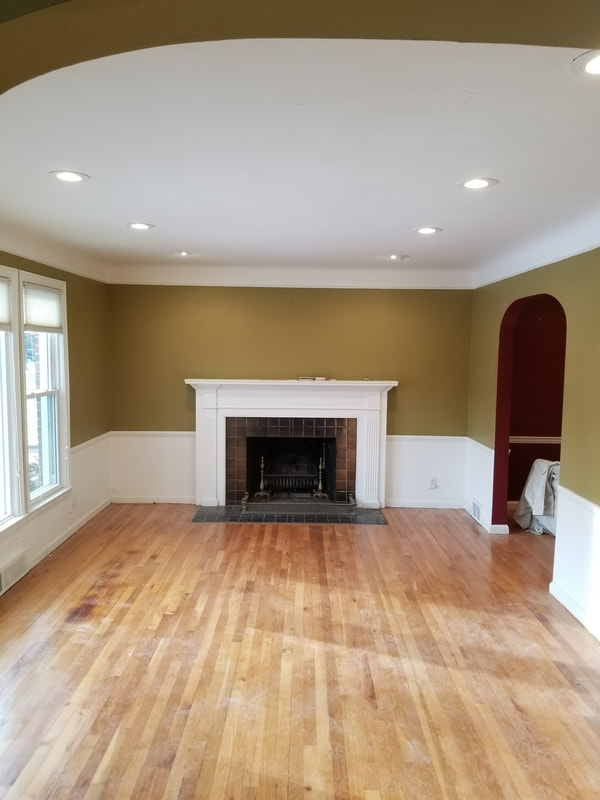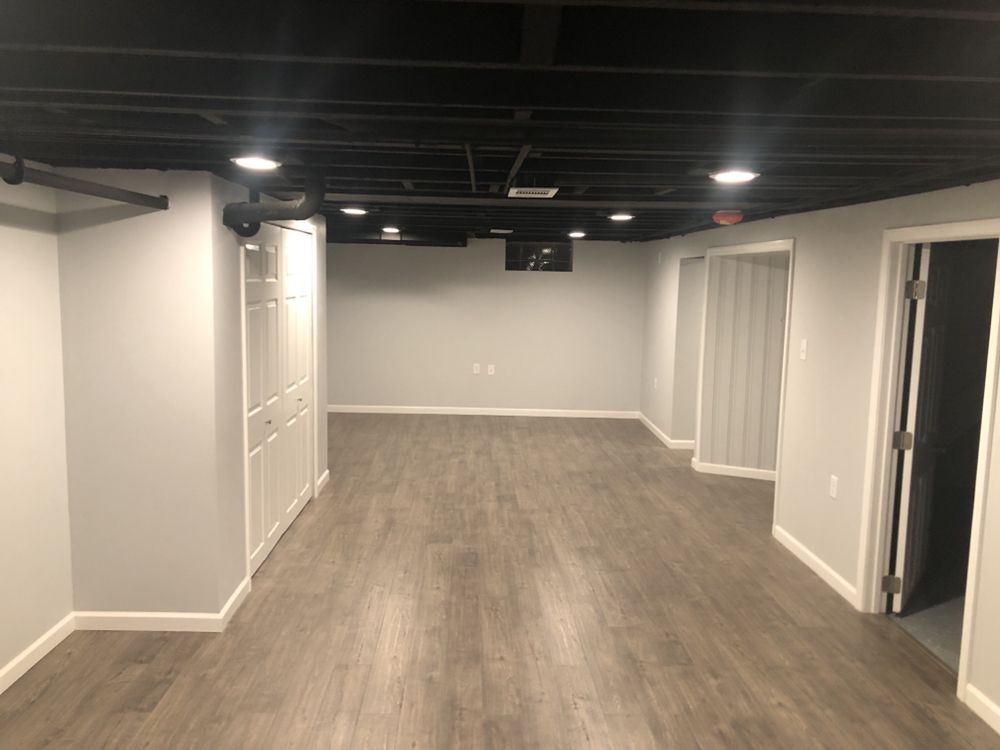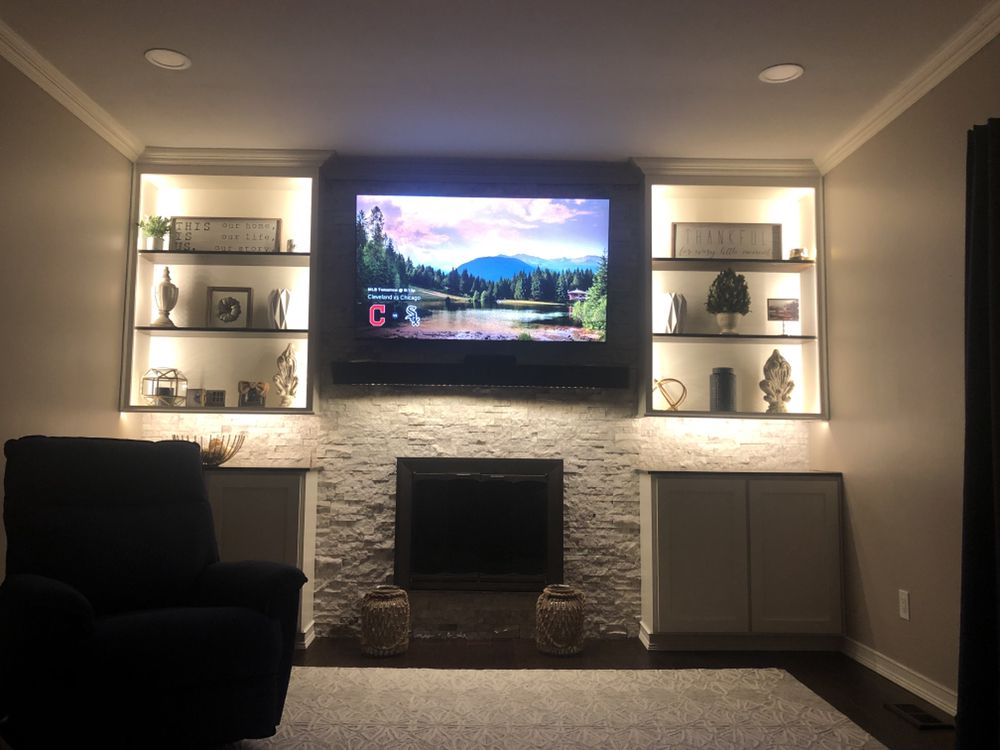
Recessed Lighting Rochester Hills, MI
Thoughtful recessed lighting can make a Rochester Hills, MI room feel brighter, more open, and easier to use without adding visual clutter. These fixtures sit within the ceiling rather than hanging into the room, which makes them a practical choice for kitchens, living spaces, hallways, bathrooms, finished basements, and work areas. The right layout does more than add light. It supports everyday tasks, creates comfortable ambient illumination, and draws attention to the parts of a room you want to enjoy.
Executive Electric is located at 20504 Hall Rd, Clinton Township, MI 48038. For property owners considering a lighting update in Michigan, a conversation about the room, ceiling conditions, intended use, and existing electrical system is a sensible first step before choosing fixture locations or finishes.
What recessed fixtures solve in a room
Recessed fixtures are built into the ceiling plane, directing light downward with a trim that can be subtle, decorative, adjustable, or designed for a specific environment. They are often called can lights, pot lights, downlights, or ceiling lights, although modern installations may use slim LED wafer-style fixtures rather than traditional housings. Their low-profile appearance is especially useful when a room needs more usable light but a pendant or chandelier would feel crowded.
A room with a single central fixture commonly has uneven illumination. Corners can look dim, counters may cast shadows, and seating areas may not have enough light for reading or hobbies. A planned array of ceiling downlights helps distribute light more evenly while giving the room a clean, finished look.
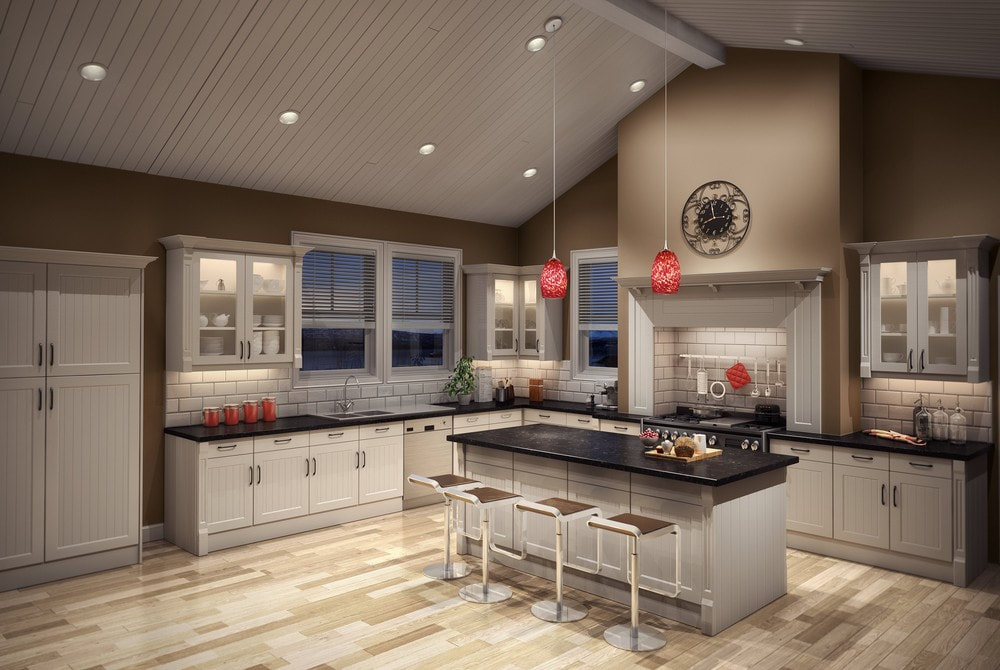
- Kitchen work zones: Ceiling fixtures can supplement under-cabinet lighting and reduce shadows at counters, sinks, and islands.
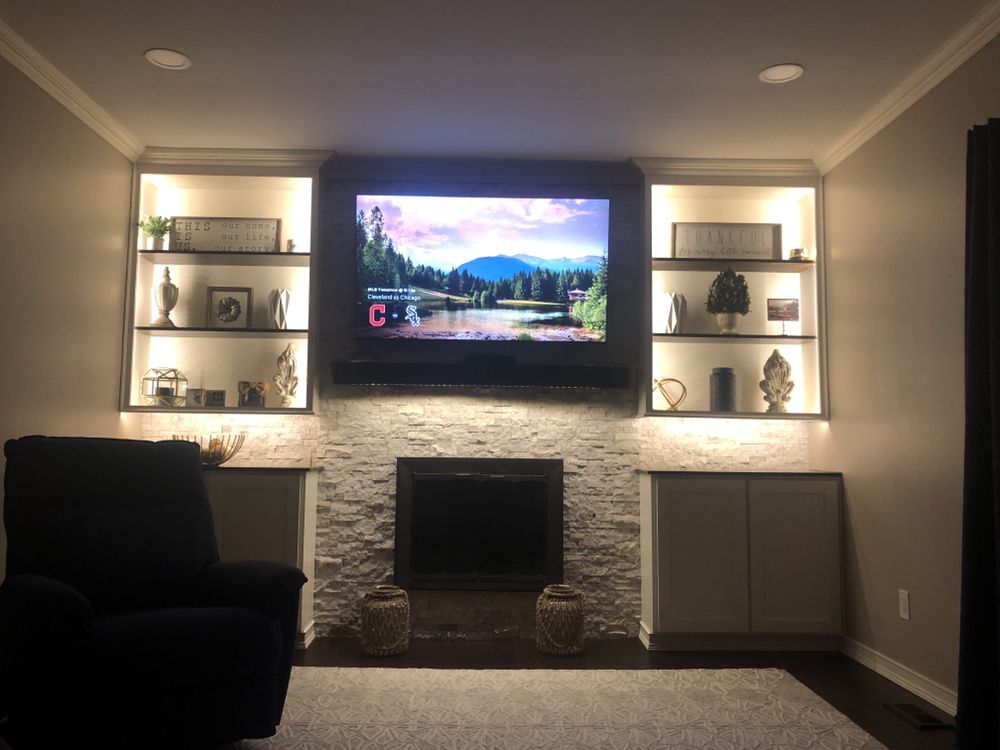
- Living rooms and family rooms: Dimmable ambient lighting can support conversation, television viewing, entertaining, and reading.
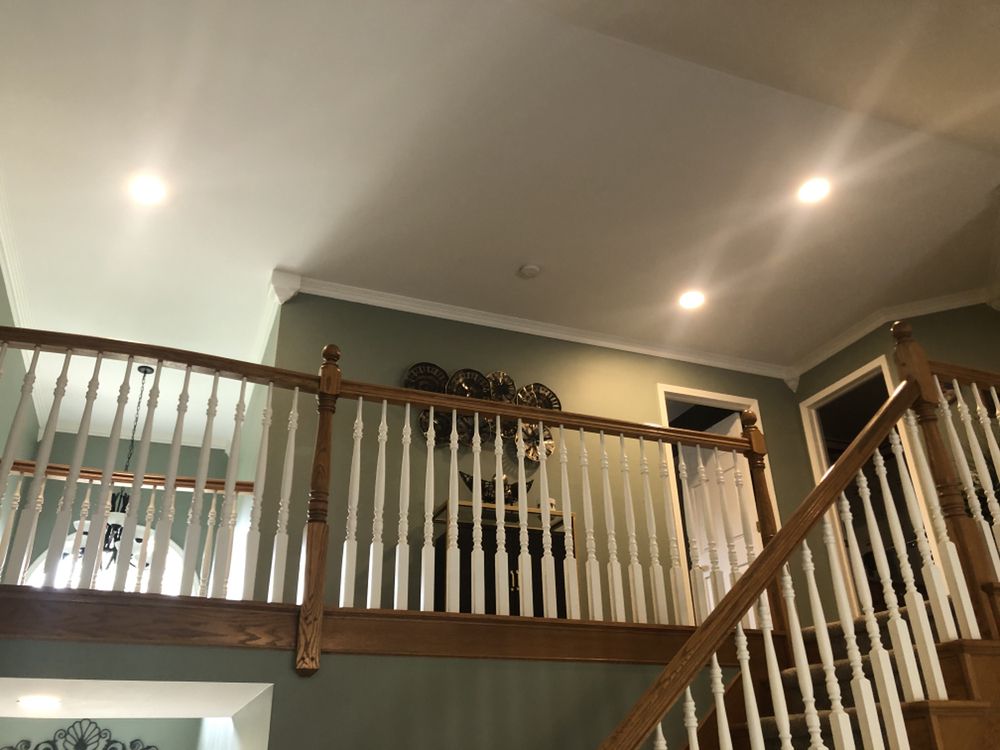
- Hallways and stair approaches: Low-profile lighting can improve visibility without taking up headroom.
- Bathrooms: Carefully placed general lighting can complement vanity lighting, provided the fixture and location suit the room’s moisture conditions.
- Basements and low ceilings: Flush ceiling lighting preserves visual space where a hanging fixture may not fit well.
The goal is not simply to add more fixtures. A useful lighting plan considers where people stand, what tasks happen in each area, where shadows fall, and how the light will look when viewed from adjoining rooms. That planning helps avoid a ceiling that feels overfilled or a room that remains dim despite having multiple lights.
Plan the layout before choosing trim or color temperature
The best recessed lighting decisions begin with the room’s function and ceiling construction, not with a fixture style alone. Fixture spacing, beam spread, lumen output, dimming preferences, insulation conditions, and access above the ceiling can all affect what makes sense. A preliminary discussion also helps identify whether the project is part of a remodel, a replacement of outdated lighting, or an effort to improve a single problem area.
Start with the activities that need light
General lighting provides overall visibility, but task lighting and accent lighting serve different purposes. In a kitchen, for example, a ceiling layout may provide ambient light while under-cabinet fixtures brighten the work surface. In a living room, adjustable recessed lights may be considered for artwork or architectural features, while a broader beam can provide comfortable background illumination.
It helps to identify the room’s primary activities before selecting a fixture plan. Cooking, grooming, desk work, crafts, reading, entertaining, and navigating at night each create different lighting needs. A plan that accounts for those uses is more valuable than placing fixtures in a simple grid without reference to the furniture, counters, or circulation path below.
Understand brightness, beam angle, and light color
Brightness is commonly discussed in lumens, not just watts. Higher lumen output can be useful in work-focused spaces, but more output is not automatically better. Too much brightness, overly narrow beams, or poorly placed fixtures can create glare, harsh pools of light, and reflections on glossy surfaces.
Color temperature also changes how a room feels. Warmer light often creates a softer, more relaxed appearance, while cooler or more neutral light may suit areas where clarity and task visibility are priorities. Color rendering is another practical consideration because it affects how accurately finishes, paint, food, and furnishings appear under artificial light. Comparing samples or discussing the desired effect can prevent a lighting choice that feels mismatched once the project is complete.
Choose controls that fit daily routines
Dimmers are a common consideration because they allow one lighting layout to serve several purposes. Bright illumination may be useful for food preparation or cleaning, while a lower setting can make the same room more comfortable for a meal or evening gathering. Compatibility matters, so the fixtures, lamps or integrated LEDs, and dimmer control should be selected to work together.
Separate switching zones can also improve flexibility. A larger open area may benefit from independently controlled groups instead of a single switch operating every fixture at once. The right arrangement depends on room use, existing wiring, and the desired level of control, which are worthwhile points to raise before work begins.
What to expect when considering an installation
A professional lighting project typically starts with an evaluation of the space and a clear conversation about goals. The electrical path, ceiling type, access above the ceiling, current fixtures, and desired controls all help shape the scope. Because opening a ceiling can involve details not visible from below, discussing conditions early helps set realistic expectations.
- Describe the room and priorities. Share whether the concern is dark counters, an outdated central fixture, insufficient basement lighting, glare, or a broader renovation plan.
- Review placement and fixture options. Consider where lighting is needed, how wide the light should spread, whether aiming is useful, and what trim appearance fits the room.
- Evaluate electrical and ceiling conditions. Existing circuits, switch locations, insulation, framing, and access can influence the approach.
- Confirm controls and finish details. Decide whether dimming, separate zones, or other control preferences are important before finalizing the plan.
- Prepare for installation and finishing. Ask what areas should be cleared, whether there may be ceiling repair or paint touch-up considerations, and how the completed lighting will be tested.
Installation work can involve cutting precise openings, routing wiring, mounting rated components, connecting controls, and testing the lighting. The specific experience varies by building and project conditions. A homeowner should ask about the anticipated work areas and any finish restoration that may be needed around openings, especially when ceilings have textured surfaces or a recently completed paint finish.
Decisions that make a lighting upgrade more successful
A good result comes from balancing appearance, comfort, maintenance, and the room’s actual needs. Recessed lighting is not the only solution for every ceiling or every design goal. Surface-mounted fixtures, track lighting, pendants, sconces, and portable lamps can be useful alternatives or companions, depending on where light is needed and how visible you want the fixture to be.
Traditional housings and slim LED options
Traditional recessed housings and slim LED recessed fixtures can both have a place in a lighting plan. Housing-based fixtures may offer particular trim or lamp options, while thin integrated LED fixtures can be attractive where ceiling space is limited. The appropriate choice depends on ceiling construction, access, desired output, trim preferences, compatibility with controls, and the details of the individual product.
Integrated LED fixtures are often selected for their streamlined form and long-use design, but replacement and service considerations should still be understood in advance. Ask how the fixture is maintained, whether the light source is replaceable, and what options exist if a component eventually needs attention. These practical details matter as much as the initial appearance.
Spacing is not a one-size-fits-all formula
Even spacing can look orderly, but it should not override the needs of the room. Lights placed directly behind a person working at a counter can cast a shadow forward. Fixtures centered over walkways may not adequately light a task area. Furniture placement, cabinetry, ceiling height, beam pattern, and wall color all influence the final effect.
For this reason, a sketch or room-by-room discussion is valuable. It can identify where a pendant may work better over an island, where under-cabinet lighting belongs, or where a small number of recessed fixtures may provide sufficient coverage. The best design often layers several types of light rather than expecting one ceiling-lighting solution to do everything.
Why contact Executive Electric about your lighting goals
Property owners researching Recessed Lighting can use an initial conversation to move from general inspiration to practical project questions. Executive Electric can be contacted from its Clinton Township location at 20504 Hall Rd, Clinton Township, MI 48038 to discuss the space, lighting goals, and details that may affect a proposed installation. Clear project information helps you make a more informed decision about fixture placement, controls, and the scope of work.
Before contacting Executive Electric, consider taking a few photos of the ceiling and room, noting the current light sources, and listing what you want to improve. Mention upcoming remodeling work, high ceilings, sloped ceilings, attic access, moisture-prone areas, or a desire to retain decorative fixtures. These details can make the conversation more productive for Rochester Hills, MI homeowners and property decision-makers.
Questions Rochester Hills property owners often ask
How many recessed lights does a room need?
The right number depends on room size, ceiling height, fixture output, beam spread, wall and surface colors, furniture layout, and the activities performed there. A kitchen with task areas needs a different approach than a bedroom or hallway. A room-specific plan is more reliable than choosing a fixture count from a generic rule.
Can recessed lighting replace every other light fixture?
Not always. Recessed fixtures are effective for general lighting and selective task or accent lighting, but pendants, vanity lights, under-cabinet lights, sconces, and lamps may still be useful. Layering light sources can improve visual comfort and make the room more adaptable for different activities.
Are dimmers worth considering for recessed lighting?
Yes, dimmers can make one lighting layout more flexible by allowing brighter light for work and lower light for relaxing or entertaining. Confirm that the selected fixture, LED driver or lamp, and dimmer are compatible. Proper compatibility helps reduce flicker, poor dimming range, or inconsistent performance.
Where is Executive Electric located for customers considering a Rochester Hills, Michigan project?
Executive Electric is located at 20504 Hall Rd, Clinton Township, MI 48038. Rochester Hills is the service-topic geography of this page, not a claimed Executive Electric office location. Contact the company directly to discuss your project and location-specific needs.
Bring a clearer lighting plan to your next project
Whether you are updating a dark kitchen, planning a finished basement, improving everyday visibility, or refining the atmosphere in a favorite room, ceiling lighting deserves more thought than a simple fixture swap. A well-considered plan can support how the space is used while keeping the ceiling visually clean and the controls easy to manage.
To discuss recessed lighting considerations for your Rochester Hills, MI property, contact Executive Electric. Executive Electric is located at 20504 Hall Rd, Clinton Township, MI 48038, and can be your point of contact for questions about the room, fixture options, and next steps.