Home Generator Installation Bloomfield, MI
A properly planned generator can keep essential household systems available when utility power is interrupted. For homeowners researching Home Generator Installation Bloomfield, MI, Executive Electric offers a clear point of contact from its location at 20504 Hall Rd, Clinton Township, MI 48038. The right system is not simply a generator placed outside. It is a coordinated electrical backup setup designed around the circuits, appliances, fuel source, and level of coverage your household needs.
Whether an outage affects only a few hours or lasts longer, backup power can help preserve refrigeration, sump pump operation, lighting, communications, heating equipment, and other selected loads. A professional consultation is useful before purchasing equipment because generator capacity, transfer equipment, electrical panel configuration, placement, and fuel availability all influence the final design. Executive Electric can help you start the conversation with the practical details that matter for a Michigan home.
Build a backup power plan around the way your home operates
Home Generator Installation is most valuable when it reflects your priorities during an outage. Some households want to run a limited group of critical circuits, while others prefer a system intended to support much of the home automatically. Identifying those expectations early helps avoid buying a unit that is either undersized for important loads or larger than the intended backup plan requires.
- Essential lighting, outlets, and refrigeration
- Sump pumps, well pumps, or other water-related equipment where applicable
- Furnace, boiler, or compatible heating controls
- Internet equipment, charging, security equipment, and garage access
- Selected kitchen appliances, laundry equipment, or broader whole-home loads
Start by considering what would create the greatest disruption if power were unavailable. A household with a finished basement may prioritize a sump pump, while someone who works from home may place communications and selected office circuits higher on the list. Families also often consider food storage, accessibility needs, electric garage doors, and the ability to maintain comfortable indoor conditions during Michigan weather changes.
Whole-home coverage and essential-load coverage are different choices
Whole house generator installation generally refers to a design intended to power a broad range of household systems, subject to generator capacity and load management. It can offer a more seamless experience, but it requires careful load calculation because large electric appliances can substantially increase demand. Essential-load designs may be a practical alternative for homeowners who want dependable support for key circuits without planning to operate every appliance simultaneously.
A generator should be sized from expected electrical loads, not from a guess based only on square footage. Heating and cooling equipment, electric ranges, dryers, water heaters, pumps, and compressors may have significant starting or running demands. Discussing which equipment must operate together gives the installer a sound basis for evaluating capacity and appropriate transfer controls.
Automatic response depends on transfer equipment
Standby generator installation typically includes a permanently installed generator and an automatic transfer switch that responds when utility power is lost. The transfer equipment separates the home from the utility supply before generator power is connected, which is an important safety function. When utility power returns, an automatic system can transfer the home back and allow the generator to complete its normal shutdown sequence.
An automatic setup differs from a portable generator connected with extension cords or a manual connection arrangement. Portables can be useful for limited, temporary needs, but they require fuel handling, setup, weather-aware placement, and active supervision. A permanently installed standby system is better suited to homeowners seeking an integrated electrical backup solution that can respond even if they are not at home.
What a professional generator installation involves
A thoughtful installation begins before equipment is ordered or placed. Executive Electric can discuss the desired coverage, inspect the relevant electrical components, and identify site-specific questions that need to be resolved. The goal is to coordinate the generator, transfer switch, service equipment, fuel plan, and protected loads into one safe, usable system.
- Discuss outage priorities: Decide which appliances and systems need power first and which loads can remain off.
- Review electrical demand: Evaluate running and starting loads to guide generator capacity and load-management decisions.
- Consider location and fuel: Address generator placement, service access, ventilation clearances, and the intended fuel supply.
- Install and connect equipment: Integrate the generator and transfer equipment with the home electrical system using an appropriate installation plan.
- Test operation and review use: Confirm the transfer sequence and help the homeowner understand normal operation, monitoring, and maintenance needs.
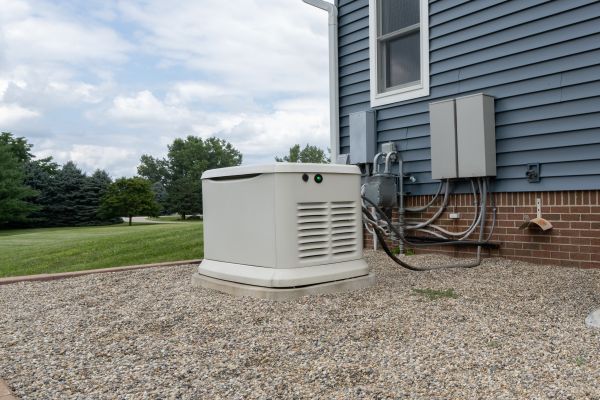
Home standby generator systems are designed for permanent outdoor placement and automatic operation with compatible transfer equipment. Unlike a portable unit, this type of generator is part of the property’s electrical infrastructure and needs a site plan that considers access, exhaust, local requirements, and connection to an approved fuel source. Homeowners should also plan for periodic maintenance so the system is ready to operate when it is needed.
Fuel choice affects convenience and planning
Natural gas generator installation can be appealing because a utility gas connection may eliminate the need to refill gasoline containers during an outage. The available gas supply and the generator’s requirements should be evaluated as part of the planning process, rather than assumed. In some situations, propane may be considered instead, and a homeowner should understand the storage and refueling responsibilities associated with that option.
Generator placement should never be treated as an afterthought. The unit needs adequate clearance and airflow, access for service, and a location that works with the electrical and fuel connections. Requirements can vary by equipment instructions and local rules, so it is wise to discuss the intended site before finalizing a purchase or pouring a pad.
Choose a level of protection that fits your household
Backup generator installation gives homeowners a dedicated way to supply selected or extensive electrical loads after a utility interruption. The best arrangement depends on the household’s expectations, not on a one-size-fits-all package. A smaller essential-circuit system may suit a homeowner who wants refrigeration, lighting, communications, and a pump protected, while a higher-capacity design may support more comfort and convenience.
It is also important to separate emergency power from routine energy use. A backup generator is intended to carry planned loads during an outage, and homeowners may need to manage high-demand appliances depending on the system design. Asking in advance how the system handles major loads, including whether load shedding or priority controls are appropriate, can make the experience more predictable.
Reliable backup starts with electrical coordination
Residential generator services involve more than selecting a generator model. The electrical panel, transfer switch, circuit selection, grounding approach, and generator controls must work together as a complete system. A professional conversation helps homeowners understand what equipment is being protected, how an outage transfer works, and what ongoing testing or service the equipment may require.
Home electrical backup solutions can range from a modest critical-load arrangement to a more comprehensive automatic standby configuration. Battery-based systems and portable generators are reasonable alternatives for certain needs, but they have different runtime, power-output, refueling, and connection considerations. Comparing options against the appliances you truly need to operate will help you choose a solution that aligns with your outage plan.
Power outage backup solutions are especially useful when losing electricity would affect safety, property protection, daily routines, or communications. For example, a planned system can help support refrigeration and lights while also addressing equipment such as sump pumps or heating controls, depending on the design. The most effective backup approach is one that identifies essential loads before an outage, not after one has already begun.
Questions to ask before moving forward
A productive consultation should give you a clearer picture of system scope and responsibilities. Rather than focusing only on the generator’s nameplate rating, ask how the proposed design addresses your actual electrical loads and what happens during the transfer from utility to generator power. Clear answers can help you compare approaches and make an informed decision for your Bloomfield, MI property.
- Which circuits, appliances, or systems will the generator be designed to support?
- How was the recommended capacity determined?
- What transfer switch or load-management equipment is included in the plan?
- What fuel source will be used, and what must be confirmed before installation?
- Where can the generator be placed for access, airflow, and connection requirements?
- What routine exercise, inspection, or maintenance does the equipment manufacturer recommend?
Executive Electric is based at 20504 Hall Rd, Clinton Township, MI 48038 and can be a useful resource when you are ready to discuss Home Generator Installation for a Bloomfield-area home. Bringing a list of priority appliances, recent electrical concerns, and questions about fuel or placement can make the initial discussion more efficient. A tailored plan begins with understanding how your household uses power when the grid is unavailable.
Common questions about generator backup
How does an automatic home generator work during a power outage?
An automatic home generator monitors utility power through a transfer switch. When an outage is detected, the switch isolates the home from utility lines and starts the generator. After power returns, the system transfers the home back to utility service and the generator shuts down according to its programmed sequence.
Can one generator power every appliance in my home?
It depends on the generator capacity, the electrical demand of the home, and which appliances may operate at the same time. Large loads such as air conditioning, electric heat, ranges, dryers, and pumps can affect sizing. A load review helps determine whether whole-home coverage, selected circuits, or load management is the better fit.
Do I need a transfer switch for a permanently installed generator?
A transfer switch is a core component of a permanent backup system because it manages the safe change between utility power and generator power. It helps prevent generator electricity from feeding back toward utility lines. The appropriate transfer equipment depends on the generator design and the loads the household intends to support.
Is Executive Electric located in Bloomfield, Michigan?
Executive Electric is located at 20504 Hall Rd, Clinton Township, MI 48038. Homeowners seeking generator planning for Bloomfield, MI can contact Executive Electric to discuss their property’s backup-power needs, desired coverage, electrical load considerations, and next steps for an installation plan.
Do not wait until an outage to determine whether your home can support the systems you rely on most. Contact Executive Electric to discuss a practical generator plan for your household, including capacity, transfer equipment, fuel considerations, and protected loads. Reach out through the Executive Electric contact page or visit the company at 20504 Hall Rd, Clinton Township, MI 48038 to begin the conversation.