EV Charger Electrical Panel Upgrade Shelby Township, MI
Adding home charging should make electric vehicle ownership easier, not create uncertainty about your electrical system. An EV Charger Electrical Panel Upgrade in Shelby Township, MI evaluates whether the service panel, main breaker, wiring capacity, and available circuit space can support a dedicated charger circuit safely and practically. Executive Electric can help property owners understand the electrical work that may be needed before moving ahead with an EV charging installation.
Executive Electric is located at 20504 Hall Rd, Clinton Township, MI 48038. For customers considering electrical improvements in Shelby Township and elsewhere in Michigan, the most useful first step is to identify the charging equipment planned, the home’s present electrical demand, and the panel’s condition rather than assuming that every charger needs the same upgrade.
When a home may need more panel capacity for EV charging
A panel upgrade is appropriate when an electrical load calculation or panel inspection shows that the existing service cannot reasonably accommodate the new continuous charging load along with the home’s current demands. It is not automatically required for every Level 2 charger. The decision depends on the electrical service size, main breaker rating, existing loads, available breaker spaces, and the charging circuit required by the selected equipment.
Level 1 charging commonly uses a standard receptacle and charges more slowly, while Level 2 charging typically uses a dedicated 240-volt circuit and can provide substantially faster home charging. That added capability is why a Level 2 installation deserves a careful review. A charger’s circuit requirements must be considered alongside heating and cooling equipment, electric ranges, dryers, water heaters, well pumps, hot tubs, workshops, and other major loads already served by the panel.
Signs that deserve a professional electrical review
Some homes have enough capacity but lack open breaker positions, while others have a crowded or aging panel that makes expansion less straightforward. A professional assessment clarifies the difference between adding a branch circuit, installing a subpanel, replacing an undersized service panel, or considering another code-appropriate solution. It also helps avoid basing an important electrical decision solely on the number printed on a charger box.
- The main panel has no usable space for a new two-pole breaker.
- The planned charger requires a 240-volt dedicated circuit.
- The home already relies on several large electric appliances or HVAC loads.
- The service equipment appears outdated, damaged, overcrowded, or difficult to identify.
- Future plans include an electric appliance conversion, an addition, or another high-demand circuit.
Frequent breaker trips, flickering lights, warm equipment, or visible corrosion are reasons to arrange a professional electrical evaluation promptly. Those symptoms do not prove that an EV charger caused the issue, but they should not be ignored or solved by installing a larger breaker. Circuit conductors, overcurrent protection, panel equipment, and the connected load all have to work together.
What an EV charger panel evaluation should determine
A useful assessment turns a broad concern about power into specific installation information. For an EV Charger Electrical Panel Upgrade, the objective is to determine a safe path for a dedicated charging circuit while accounting for the whole home, not just the vehicle. Executive Electric can discuss the installation circumstances and the electrical changes that may be relevant to your project.
Load calculation comes before equipment choices
An electrical load calculation estimates the demand that the dwelling’s service must be capable of handling. It considers applicable loads and demand factors rather than simply adding every appliance nameplate rating together. Because EV charging is treated as a continuous load, circuit and equipment sizing need to reflect the charger’s requirements and applicable electrical rules.
This review can reveal several possible paths. A home may only need a new dedicated circuit if capacity and panel space are available. Another property may benefit from a subpanel for distribution, while a limited or fully utilized service may call for a main panel or service upgrade before a higher-output charger makes sense. The right choice is the one supported by the actual installation conditions, not the largest option by default.
Panel space and service capacity are different issues
Available panel space is about whether there is room for the required breaker and properly arranged circuits. Service capacity is about whether the electrical service can carry the calculated demand. A panel can have open spaces yet have insufficient calculated capacity, and a panel can have adequate service capacity but no practical room for the new circuit.
That distinction matters when comparing a panel replacement, a subpanel, load management equipment, or a lower-amperage charging setup. A subpanel may help organize or extend distribution where appropriate, but it does not automatically increase the capacity of the electrical service. Likewise, choosing a lower charging rate may reduce the required circuit demand, although it changes how quickly the vehicle can recharge at home.
Planning the charging circuit and panel work
The charger circuit route influences both the scope of work and the final charging experience. The electrical panel may be in a basement, garage, utility room, or another area, while the desired charging location may be near a driveway or inside a garage. Distance, routing access, finished walls, the charger location, and the equipment manufacturer’s instructions all affect the installation plan.
- Discuss the charging goal. Identify the vehicle, desired charging level, charger specifications, and whether future EVs are part of the plan.
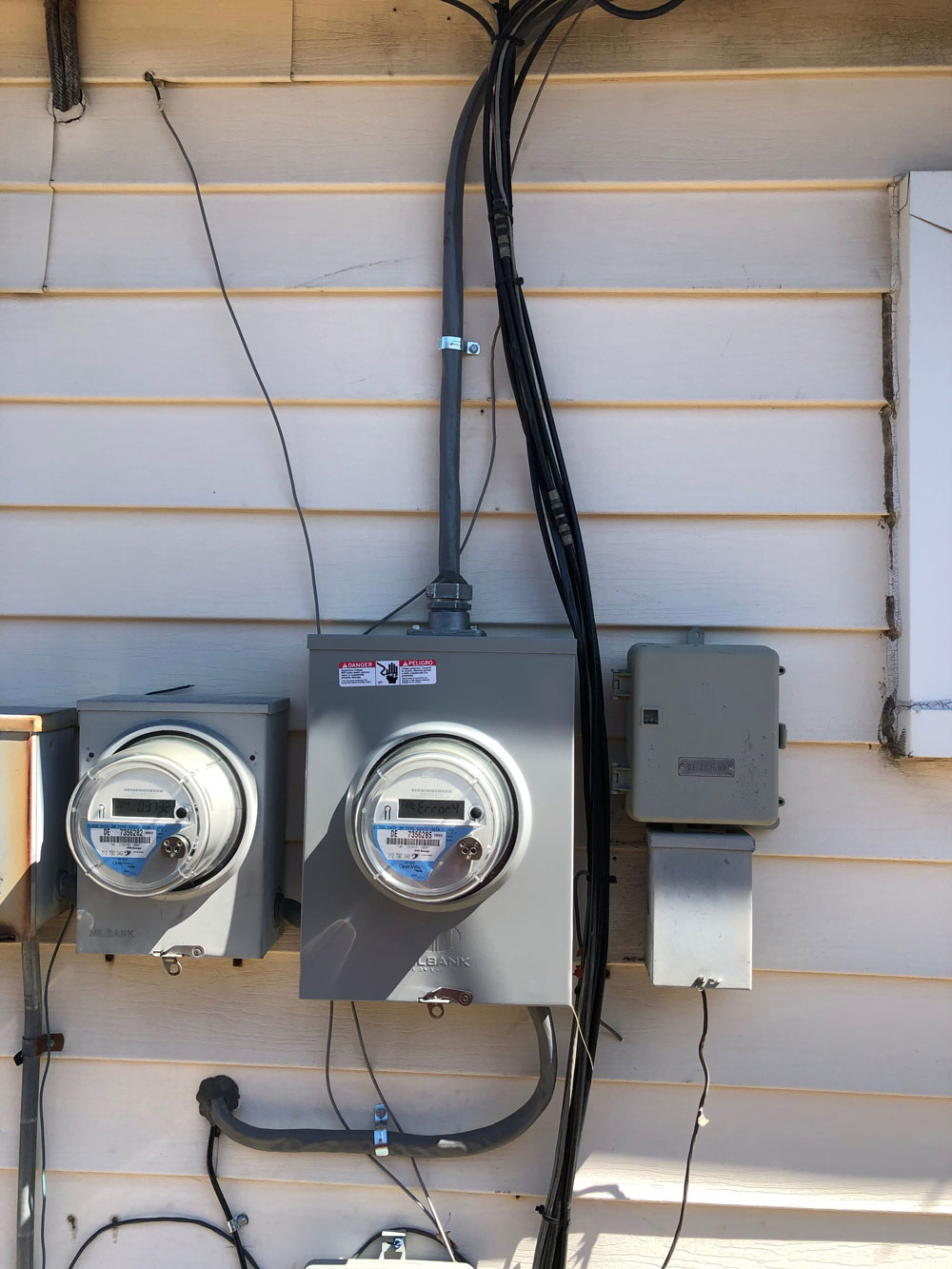
- Review existing electrical equipment. Examine the panel, main disconnect or breaker, circuit availability, visible condition, and major household electrical loads.
- Determine the appropriate electrical scope. The result may be a dedicated circuit, panel modification, subpanel, service upgrade, or a different charging approach.
- Plan the circuit route and equipment location. Confirm a practical route for wiring and a charging location that fits how the vehicle will be parked and used.
- Complete the installation and final checks. The work should follow applicable requirements, manufacturer instructions, and any required local permitting or inspection process.
Homeowners should also think beyond today’s vehicle. A charging arrangement that fits one plug-in hybrid may differ from what is needed for a battery-electric vehicle, a second EV, or a household moving toward electric heating and cooking. Sharing those plans early helps frame the panel upgrade discussion around long-term electrical priorities without assuming unnecessary work.
Choosing charging power involves a practical tradeoff
Higher-amperage Level 2 charging can shorten recharge time, but it may require more electrical capacity and a larger dedicated circuit. Lower-amperage Level 2 charging can still be a highly usable overnight solution for many driving patterns and may fit a home’s existing capacity more readily. The best fit depends on vehicle use, battery size, time parked at home, and what the electrical evaluation supports.
It is also important to distinguish the charger from the electrical infrastructure behind it. The wall-mounted unit or receptacle is only one part of the project. The branch circuit, conductors, breaker, grounding and bonding considerations, service panel, and service capacity are all part of an installation that needs to be planned as a complete system.
Why the panel upgrade decision should be specific to your home
The phrase EV Charger Panel Upgrade is often used broadly, but the electrical work can range from a relatively direct circuit addition to a more involved service-capacity project. A site-specific review helps separate what is essential for safe charging from optional improvements that may be useful for future expansion. That clarity supports a more informed decision about equipment, charging speed, and project timing.
For a Shelby Township, MI homeowner, it is reasonable to ask how the proposed work addresses both present household demand and future use. Request a clear explanation of the recommended scope, including why a panel replacement, subpanel, load-management option, or lower-output charger is being considered. A provider should be able to explain the relationship between the EV circuit and the rest of the home’s electrical system in understandable terms.
- Ask what charging circuit rating the selected equipment requires.
- Ask whether the existing panel has both physical space and adequate calculated capacity.
- Ask whether the recommendation addresses current needs, future EV plans, or both.
- Ask how wiring will be routed to the charging location and what access may be needed.
- Ask about the applicable permit and inspection steps for the property and scope of work.
A thoughtfully planned electrical upgrade can provide a dedicated path for charging while reducing the guesswork that comes with adding a major continuous load. It can also help homeowners make decisions in the right order: confirm electrical capability, select equipment that fits that capability and daily routine, then complete installation according to the final plan.
Talk with Executive Electric about your charging project
Executive Electric offers a local point of contact at 20504 Hall Rd, Clinton Township, Michigan 48038 for customers evaluating EV charging electrical needs. Bringing basic details to the conversation, such as the vehicle, preferred charger, panel photos if available, major electric appliances, and the intended parking location, can make the initial discussion more productive. Executive Electric can help you start with the electrical questions that matter before committing to a charger configuration.
If you are weighing an EV Charger Electrical Panel Upgrade in Shelby Township, MI, contact Executive Electric to discuss your property and next steps. Get in touch to begin a clear conversation about panel capacity, dedicated charging circuits, and your home-charging goals. Visit Executive Electric’s contact page to request contact regarding your project.
Frequently asked questions
Does every Level 2 EV charger require an electrical panel upgrade?
No. A Level 2 charger needs a properly sized dedicated 240-volt circuit, but an electrical panel upgrade is only needed when the existing panel lacks suitable space, has condition concerns, or the home’s calculated electrical load does not support the added continuous charging demand.
What is included in an EV Charger Electrical Panel Upgrade?
An EV Charger Electrical Panel Upgrade may include reviewing service capacity, completing a load calculation, adding a dedicated EV circuit, replacing or modifying panel equipment, or upgrading service components when needed. The exact scope depends on the home’s existing electrical system, charger rating, circuit route, and applicable requirements.
Can a subpanel solve an EV charging capacity problem?
A subpanel can provide additional circuit distribution or breaker space in appropriate situations, but it does not by itself increase the capacity of the main electrical service. If the load calculation shows that the service is already fully utilized, the solution may require a service or main panel upgrade rather than only a subpanel.
Is Executive Electric physically located in Shelby Township, Michigan?
Executive Electric’s supplied location is 20504 Hall Rd, Clinton Township, MI 48038. The Shelby Township, MI page is intended for people seeking information about EV charging panel needs in that area; contact Executive Electric to discuss your property and the appropriate next step.