Commercial EV charger installation Farmington Hills, MI
Commercial EV charger installation in Farmington Hills, MI gives employers, property owners, and site managers a practical way to support electric driving where people work, shop, stay, or park. A well-planned charging project is not simply a matter of mounting equipment. It requires matching charger output, parking patterns, electrical capacity, user access, and future growth to the real needs of the property.
Executive Electric is listed at 20504 Hall Rd, Clinton Township, MI 48038. Businesses considering a Michigan charging project can use the contact process to discuss their property, objectives, and the information needed to determine a sound next step. The goal is a charging installation that fits the site and gives decision-makers a clearer path from early planning through activation.
Build a charging plan around how your property is used
The right commercial charging solution begins with the people who will use it and how long their vehicles typically remain parked. A workplace with vehicles parked for most of a shift often has different needs than a retail site, hotel, fleet yard, or public-facing parking area. Defining the use case before selecting equipment helps avoid paying for unnecessary output or choosing charging that does not meet driver expectations.
Start with dwell time, access, and charging goals
Charging speed should be considered alongside parking duration. Level 2 equipment is commonly suited to locations where vehicles will be parked for hours, while direct-current fast charging is intended for shorter stops and higher power needs. The number of ports, whether charging is employee-only or open to visitors, and whether drivers pay for use all affect the layout and equipment choices.
Before moving forward, it helps to document the practical questions that shape a commercial EV charging project:
- Who will be allowed to charge: employees, tenants, customers, fleet drivers, or the public?
- How many vehicles may need charging at one time, both now and later?
- What are typical parking durations during business hours and overnight?
- Where can chargers be placed without obstructing accessible routes, traffic flow, loading, or existing parking operations?
- Does the owner want networked access control, user billing, usage reporting, or simple no-cost charging?
- What electrical equipment serves the proposed parking area, and what capacity may be available?
These answers turn a broad request into a usable scope. They also make it easier to compare proposals on meaningful points, such as electrical upgrades, trenching distance, protective bollards, equipment responsibilities, and the number of active charging ports, rather than comparing only a headline price.
Workplace charging can support daily routines
Workplace EV charger setup is most useful when it reflects employee schedules, assigned parking practices, and the organization’s policy for charger access. For example, a business may choose shared Level 2 stations for employees parked throughout the workday instead of installing a small number of high-output units that are not aligned with typical dwell time. Clear rules for parking, connector sharing, and any payment method can help make charging access more predictable after installation.
Employers may seek workplace charging to add an on-site amenity, support employees who drive electric vehicles, or prepare parking assets for changing transportation needs. The electrical design should leave room for sensible expansion when possible, since installing pathways, conduit, or distribution capacity during an initial project can be less disruptive than revisiting finished pavement later. Future-ready planning does not require overbuilding today, but it does require discussing likely growth honestly.
Public-facing charging requires a user-first layout
A Public EV charger installer project should prioritize easy-to-find parking spaces, safe cable reach, clear operating instructions, and a layout that works for different vehicle charge-port locations. Public or customer-accessible stations may also need a deliberate approach to uptime monitoring, payment processing, signage, and who responds when a driver has a question. Property owners should decide at the planning stage whether charging is a complimentary amenity, a paid service, or access-controlled for a defined group.
For publicly accessible charging, placement matters as much as charger type. Stations positioned too far from the electrical source can increase excavation and conductor costs, while stations placed without considering vehicle circulation can create avoidable conflicts. A site review helps identify a route from electrical service to parking spaces and identify physical protection requirements for charging equipment.
What a commercial installation typically involves
Commercial EV charger installation is a coordinated electrical and site-planning effort. The exact scope differs by property, but a careful process identifies constraints early, clarifies ownership decisions, and creates a safer path to putting chargers into service. Executive Electric can be contacted to begin a discussion of the project requirements for a Farmington Hills property.
- Define the objective. Establish who will charge, desired charger quantity, anticipated parking duration, access rules, and whether the project should accommodate expansion.
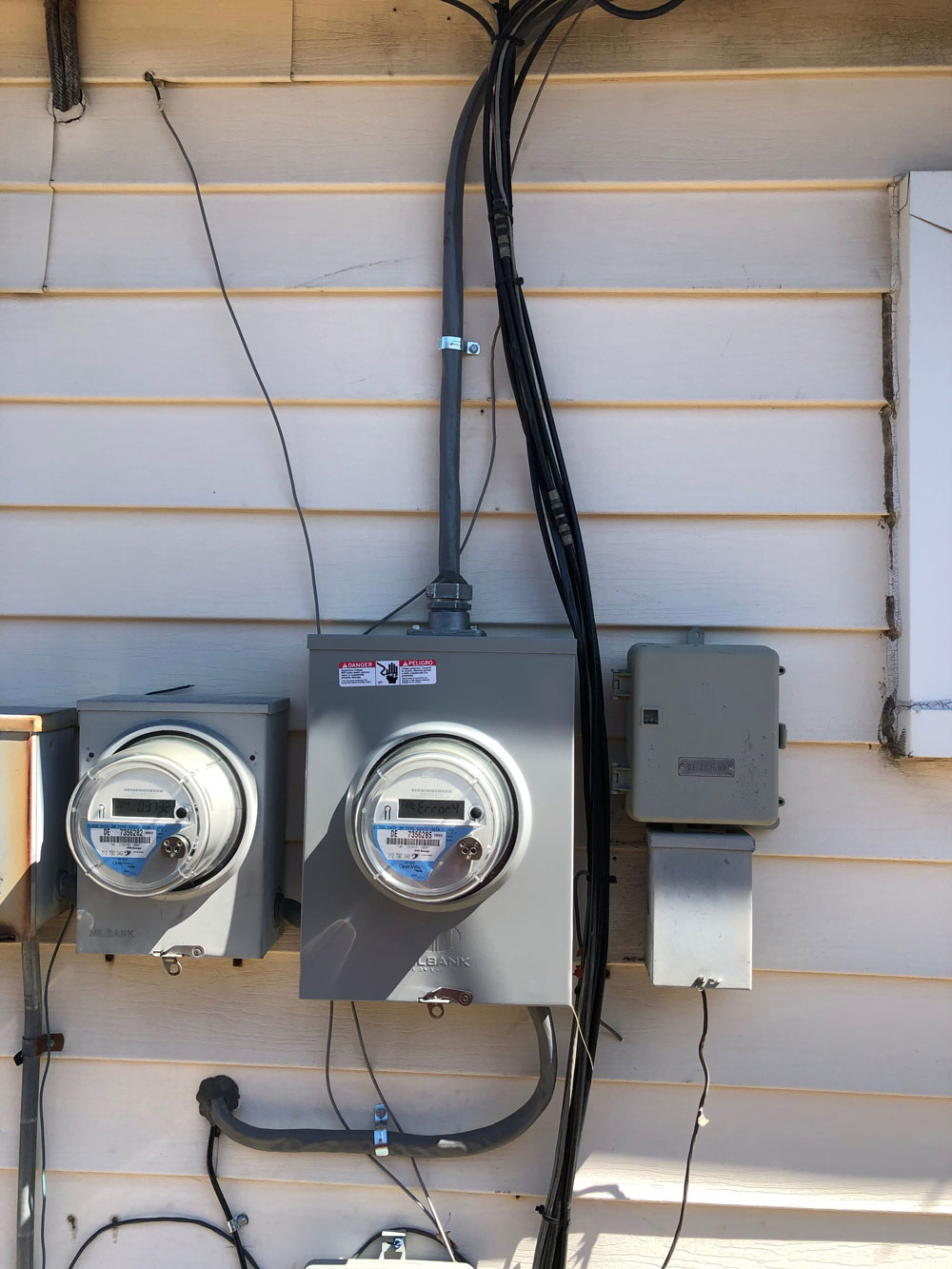
- Review the site and electrical supply. Examine the proposed charger area, electrical panels or service equipment, possible feeder routes, parking conditions, and physical obstacles.
- Select an approach. Compare charger levels, network capabilities, layout options, load management possibilities, and any electrical improvements required for the selected equipment.
- Plan the installation work. Coordinate electrical routing, mounting, trenching or boring where applicable, equipment protection, and site restoration considerations.
- Complete testing and turnover. Verify that installed equipment operates as intended and ensure the owner understands basic access, operating, and support arrangements for the selected charging system.
An EV charging dock installation includes more than the visible pedestal or wall-mounted unit. The work may involve dedicated circuits, feeders, disconnects, panel modifications, underground routing, mounting foundations, and protection from vehicle contact, depending on the site and equipment. Asking how each of these elements is handled helps a property owner understand the complete project scope before work starts.
Permitting and inspection requirements can be part of a commercial electrical project, but the details depend on the authority with jurisdiction and the site conditions. A prospective customer should ask what approvals are expected, what documentation the equipment manufacturer requires, and how any utility-related coordination may affect the schedule. It is wise to confirm responsibilities in writing rather than assuming every party handles the same portion of the work.
Choosing between Level 2 and DC fast charging
The most appropriate charger is the one that delivers useful energy within the time vehicles are parked while fitting the property’s electrical and budget realities. Higher power is not automatically better. DC fast charging can be valuable for quick-turn locations and certain fleet applications, but it can require substantially greater electrical capacity and a more complex site investment than Level 2 charging.
EV fast charger installation is generally considered when drivers need to add meaningful range during relatively brief visits or when fleet operations require quick turnaround. Because fast chargers operate at higher power, the project evaluation should closely examine utility service, distribution equipment, equipment siting, demand implications, and the business reason for rapid charging. For a site where cars remain parked for several hours, multiple Level 2 ports may provide a more practical balance of access and infrastructure cost.
| Consideration | Level 2 charging | DC fast charging |
|---|---|---|
| Typical fit | Workplaces, multifamily parking, longer customer visits | Shorter stops, route-based charging, some fleet needs |
| Electrical demand | Generally lower than DC fast charging | Higher, requiring close capacity evaluation |
| Planning focus | Port count, sharing, parking duration, future expansion | Utility capacity, rapid turnover, higher-power equipment, site economics |
Equipment compatibility and connector standards should be reviewed with the charger manufacturer’s requirements and the vehicles expected to use the site. Networked systems can offer features such as user authorization, status visibility, reporting, and payment options, while non-networked equipment may suit simpler private-use applications. The right decision depends on operational needs, not on a single feature list.
Questions to ask before you approve the project
A useful provider conversation should make the electrical scope understandable, even if the final design is technical. Ask what assumptions were made about available capacity, equipment location, underground work, protective measures, and future ports. If a proposal includes unfamiliar terms, request a plain-language explanation of what is included, excluded, and dependent on site findings.
- What charger type and output best align with the property’s parking duration?
- Will the existing electrical system need modifications or additional capacity?
- How will cable routing, surface restoration, and equipment protection be addressed?
- What owner decisions are needed regarding access, fees, software, and operating policies?
- Can the initial electrical pathway support additional chargers later?
- What testing, documentation, permits, and inspections apply to the planned scope?
For a Farmington Hills, MI business, the most useful proposal is one that connects technical work to daily operations. It should account for where people park, when charging is needed, and how the installation affects the property during construction. That clarity lets owners compare alternatives based on long-term function, not just upfront equipment cost.
If your organization is evaluating Commercial EV charger installation, Executive Electric offers a direct contact option for discussing the site, charging goals, and project considerations. Share the property type, approximate number of spaces under consideration, intended users, and any known electrical information. Those details can make the first conversation more productive and help identify the questions that need answers before installation planning proceeds.
Frequently asked questions
How do I know whether Level 2 or DC fast charging is right for my commercial property?
Choose based primarily on vehicle dwell time and the reason drivers visit. Level 2 is often appropriate when vehicles park for hours, while DC fast charging is designed for shorter stops that require faster energy delivery. Electrical capacity, installation complexity, operating model, and future demand should also guide the decision.
What information should I prepare before requesting commercial EV charger installation in Farmington Hills, MI?
Prepare the property address, intended charger users, proposed number of ports, typical parking duration, photos or drawings of the parking area if available, and any known electrical-panel information. Also identify whether charging will be free, paid, public, private, or fleet-only. This information supports a more focused initial discussion.
Will commercial EV chargers always require a major electrical upgrade?
Not always. The need for electrical modifications depends on existing capacity, selected charger output, the number of ports, simultaneous charging demand, and the distance from electrical equipment to parking spaces. A site and load review is the appropriate way to determine whether dedicated circuits, panel work, service changes, or load-management strategies should be considered.
Where is Executive Electric located for a Michigan commercial charging inquiry?
Executive Electric is listed at 20504 Hall Rd, Clinton Township, MI 48038. The company’s provided location is in Clinton Township, not Farmington Hills. Contact Executive Electric to discuss whether the commercial charging project, site conditions, and requested scope are a fit for the service conversation.
Discuss your commercial charging project
Commercial charging is most effective when the equipment, electrical infrastructure, and parking operation work together. Whether you are considering employee charging, tenant amenities, customer access, or fleet readiness, beginning with a clear project brief can reduce uncertainty before construction decisions are made.
Contact Executive Electric to discuss commercial EV charger installation needs connected to Farmington Hills, MI. Executive Electric is located at 20504 Hall Rd, Clinton Township, MI 48038. Contact Executive Electric about your commercial charging project and provide your property details, intended charger use, and planning questions.