Home EV charger installation Sterling Heights, MI
Homeowners researching Home EV charger installation in Sterling Heights, MI often want a simpler, more dependable way to recharge an electric vehicle between daily drives. A dedicated charging setup can eliminate reliance on a standard wall receptacle, help match charging speed to household routines, and keep the installation planned around the electrical system rather than improvised extensions or adapters.
Executive Electric is located at 20504 Hall Rd, Clinton Township, MI 48038. For a Michigan homeowner comparing charger options, the practical first step is to discuss the vehicle, preferred charger location, panel capacity, and the charging results that would make the project worthwhile. Those details shape the equipment and electrical work a property may need.
Make at-home charging fit your vehicle and routine
A properly planned residential charging solution gives an EV a consistent place to recharge while it is parked. It can be a useful fit for new EV owners, households adding a second electric vehicle, commuters who want overnight replenishment, and drivers who would rather not depend on public charging for everyday energy needs. The right approach depends on driving habits, vehicle capability, available electrical capacity, and where the vehicle is normally parked.
Most homeowners begin by deciding whether a basic charging arrangement meets their needs or whether faster 240-volt charging makes more sense. Charging equipment is not one-size-fits-all: the vehicle connector, charger output, circuit size, cable reach, garage or outdoor location, and future vehicle plans all matter. A careful review helps avoid selecting equipment before confirming that the home can support it safely and appropriately.
- Convenient daily charging: Start the day with energy added while the vehicle was parked at home.
- Better fit for regular driving: Higher-capacity charging may be more practical than a standard outlet for frequent use.
- Purpose-built electrical setup: A dedicated circuit can be designed around the charging equipment and installation location.
- Future-minded planning: Electrical decisions can consider a new EV, another driver, or a later equipment upgrade.
What a residential charging project actually includes
Residential EV charger installation is more than mounting a charger on a wall. It generally involves evaluating the electrical panel, determining whether a dedicated circuit is needed, selecting a suitable route for wiring, and placing the equipment where the charging cable can reach the vehicle without creating an inconvenient setup. The result should be considered alongside the home’s layout, the charger manufacturer’s instructions, and applicable electrical requirements.
Some properties have a garage close to the electrical panel, while others may require a longer wire path to a driveway, detached structure, or exterior wall. Distance, wall construction, access, and the condition of existing electrical equipment can affect the scope. Discussing these conditions early gives the homeowner a clearer basis for deciding how to proceed.
Choosing the right place for the equipment
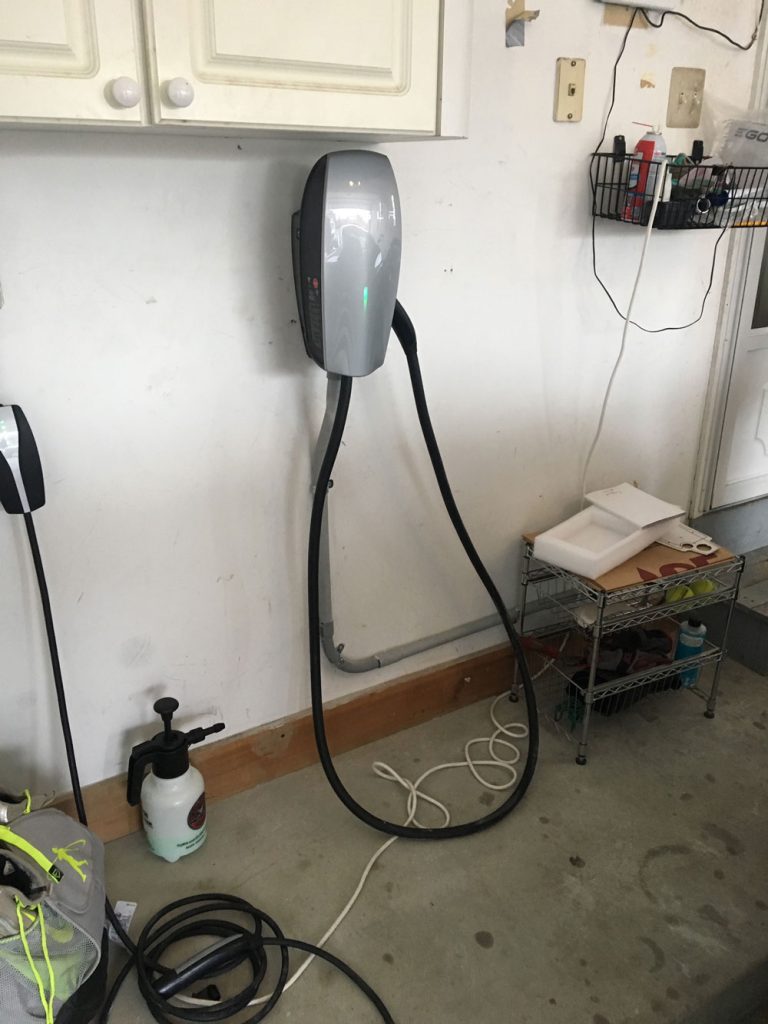
A Home charging station should be positioned for everyday use, not simply wherever there is open wall space. The ideal location accounts for where the vehicle parks, how the connector reaches the charge port, protection from damage, cable management, and whether the installation is indoors or outdoors. A convenient location makes it easier to plug in consistently and reduces the temptation to use unsuitable temporary power arrangements.
Homeowners should also consider access to the electrical panel and whether the charger will remain practical if they change vehicles. Charge-port positions vary, so a location that works for one model may be less convenient for another. When an outdoor installation is under consideration, weather-rated equipment and installation conditions deserve particular attention.
Level 1, Level 2, and outlet-based charging options
Understanding charging levels helps homeowners compare options based on real needs rather than just the highest available output. A standard 120-volt setup may work for limited daily mileage, but it generally adds energy more slowly. A 240-volt arrangement can be a stronger choice for drivers who need more charging added during an evening or overnight parking period.
When faster charging is worth considering
Level 2 EV charger installation commonly uses a dedicated 240-volt circuit to support faster home charging than a typical 120-volt outlet. It may be especially useful for households with longer daily drives, limited time between trips, larger battery vehicles, or more than one EV. Actual charging performance still depends on the vehicle’s onboard charging capability, charger settings, and the electrical circuit selected for the installation.
Faster is not automatically better for every household. A driver with modest mileage and ample time at home may find a lower-output setup sufficient, while a busy household may value a higher-capacity solution. The sensible choice is the one that reliably supports normal use without making assumptions about panel capacity or equipment compatibility.
240V EV charger installation requires more than plugging a portable charger into an existing receptacle. The circuit, breaker, conductor sizing, receptacle or hardwired equipment, and installation environment must be considered together. A professional evaluation helps establish whether the home’s current electrical service and panel arrangement can accommodate the planned load or whether additional electrical work should be discussed.
A hardwired charger and a receptacle-based charger can each be appropriate in the right circumstances. Hardwired equipment can provide a permanent, dedicated connection, while an outlet may offer flexibility for compatible plug-in equipment. The preferred option should reflect the charger’s requirements, the desired output, future plans, and the property’s electrical configuration.
Vehicle-specific and outlet choices
Tesla charger installation calls for attention to the specific Tesla charging equipment, the selected charging level, and how the owner expects to use the vehicle at home. Tesla owners may choose manufacturer-specific equipment or another compatible charging approach, but the electrical circuit still needs to align with the equipment and vehicle requirements. Planning for cable reach and a clean parking routine can be just as important as choosing the charger itself.
If the household may switch vehicles later, it can be helpful to think beyond one connector style. Many EV charging arrangements can work with different vehicles through compatible equipment or adapters, but homeowners should verify compatibility before purchase. Discussing present and future vehicles before installation can reduce the chance of making a short-term choice that is inconvenient later.
EV charging outlet installation may be appropriate when the selected charger is designed to plug into a correctly installed receptacle. The outlet should not be treated as an ordinary convenience receptacle because EV charging can represent a sustained electrical load. Equipment instructions, circuit rating, outlet type, and the condition of the connection all help determine whether this approach fits the project.
For some homeowners, a plug-in arrangement provides flexibility if compatible equipment needs to be replaced or relocated. For others, a permanently connected charger better suits the desired layout and use pattern. Executive Electric can be contacted to discuss the electrical considerations involved before a homeowner commits to either direction.
A clear process before, during, and after installation
The most useful charging projects start with an electrical and practical review, then move to an installation plan that matches the home and equipment. This is important because a charger purchase alone does not establish that a specific circuit, panel, wall location, or outlet arrangement is suitable. Clear communication about the vehicle and site helps keep expectations realistic.
- Describe your charging needs. Share the vehicle model, typical driving, preferred charging time, charger type, and whether another EV is likely in the future.
- Review the proposed location. Consider parking position, cable reach, indoor or outdoor exposure, access to the electrical panel, and a route for wiring.
- Evaluate the electrical system. Panel capacity, existing loads, available breaker space, and the proposed dedicated circuit all influence the plan.
- Confirm equipment and installation details. Determine whether the charger will be hardwired or plug-in and what electrical work the selected equipment requires.
- Use the completed setup as intended. Follow the charger and vehicle instructions, keep connectors and cables in good condition, and contact a qualified professional if performance or electrical concerns arise.
Homeowners should be prepared to ask what electrical work is anticipated, where equipment will be installed, and whether the selected charger is compatible with the vehicle. It is also reasonable to ask about any site conditions that could affect the plan, such as panel limitations, a long wiring route, an exterior mounting location, or the need to coordinate permits and inspections where applicable. Direct answers make it easier to compare an installation approach with the household’s priorities.
Why a dedicated electrical plan matters
EVs draw power for extended periods, which is why a charging installation should be approached as a planned electrical project rather than a casual accessory purchase. A dedicated circuit and appropriately selected equipment can support a more orderly, repeatable charging routine. It also helps homeowners move away from relying on extension cords, improvised outlet use, or uncertain electrical capacity.
Executive Electric offers a local point of contact at 20504 Hall Rd, Clinton Township, Michigan 48038 for homeowners evaluating an at-home EV charging project. Rather than assuming every home needs the same charger or circuit, contact Executive Electric with your vehicle information and property details to begin a focused conversation. That preparation can help clarify the practical choices before equipment is purchased or work is scheduled.
Frequently asked questions about home EV charging
How long does Home EV charger installation usually take?
The installation timeline depends on the home’s electrical panel, the distance to the charger location, wiring access, selected equipment, and any required approvals. A straightforward nearby installation can differ significantly from a project involving panel changes, long wire runs, or an exterior location. A site-specific discussion is the best way to understand the anticipated scope.
Do I need a Level 2 charger for an electric vehicle?
Not always. A Level 2 charger is often useful when a household needs more energy added during normal parking time, but a 120-volt option may suit drivers with lower daily mileage and more time to charge. The decision should consider driving patterns, vehicle capability, and the home’s available electrical capacity.
Can I use an existing dryer outlet for EV charging?
Do not assume an existing appliance outlet is suitable. Outlet type, circuit rating, wiring condition, ongoing appliance use, charger requirements, and electrical load must all be evaluated. A dedicated EV charging circuit is often the clearer approach when the goal is consistent, everyday vehicle charging.
Is Executive Electric located in Sterling Heights?
Executive Electric’s supplied location is 20504 Hall Rd, Clinton Township, MI 48038, not Sterling Heights. Homeowners looking for Home EV charger installation Sterling Heights, MI can use the contact form to discuss their property, charging equipment, and whether Executive Electric is the right contact for the project.
Ready to plan your home charging setup? Contact Executive Electric to discuss Home EV charger installation, charger options, and the electrical details of your property. Reach out through the Executive Electric contact page or visit the listed location at 20504 Hall Rd, Clinton Township, MI 48038 to start the conversation.